Saints Peter and Paul, the Chief Apostles
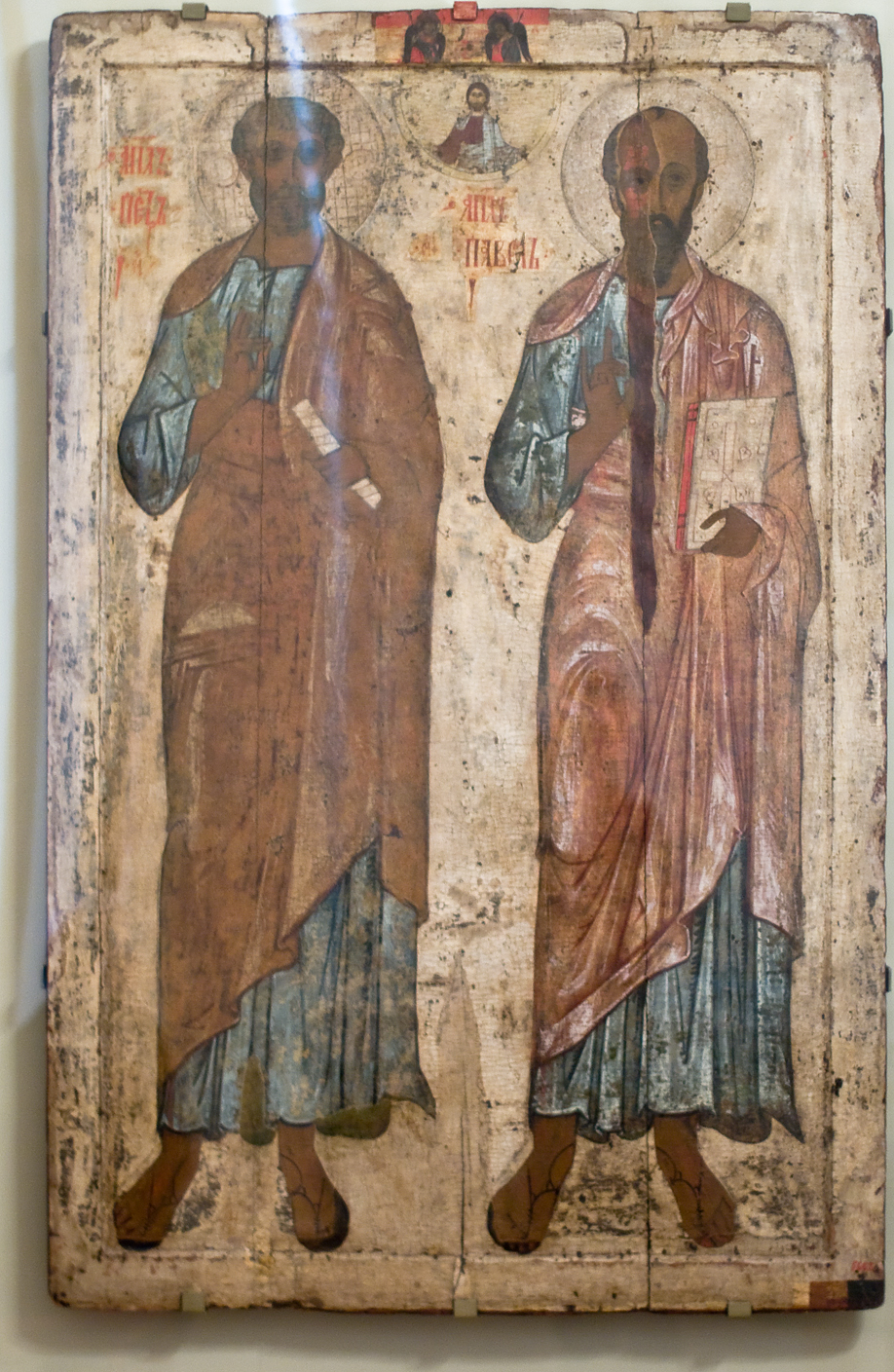
On June 29 the Orthodox Church celebrates the feast of the Holy, Glorious, and All-Praised Chief Apostles Peter and Paul, Святих Первоверховних Апостолів Петра і Павла. We honor them together because the Church has always remembered them together: two very different men, called by Christ in very different ways, who finished the same race and were crowned with the same crown on the same day in Rome, around the year 67.
This page is for parishioners who want to know these great apostles better, and for anyone who has wondered whether the Christian life is more about fishing nets, like Peter, or prison letters, like Paul. The Church answers, gently, both.
Why Peter and Paul are remembered together
The two greatest apostles, who in life sometimes disagreed sharply (Galatians 2:11-14), are commemorated by the Church as a single feast. Saint John Chrysostom calls them “the two pillars of the Church.” The Orthodox tradition keeps them as chief apostles, the first among equals at the head of the apostolic college.
The reason is theological. Peter is the apostle to the Jews; Paul the apostle to the Gentiles. Peter, the Galilean fisherman, was an eyewitness of Christ from the Jordan to the Cross. Paul, the Pharisee of Tarsus, never walked with Jesus in the flesh; he met the Risen Lord on the road to Damascus. The Church gathers them in one feast to say that the Gospel goes out to all peoples, through every kind of calling. The unlettered fisherman and the learned rabbi are both indispensable. The Church holds them together because the Church is held together by them.
Two callings, one Christ
Peter, the fisherman who became the rock
Simon, son of Jonah, was a married fisherman from Bethsaida on the Sea of Galilee. He was working with his brother Andrew when the Lord called them: “Follow me, and I will make you fishers of men” (Matthew 4:19). He left his nets and never went back.
Of all the Twelve, Peter is the most fully drawn in the Gospels: impulsive, generous, fiercely loyal, and capable of dramatic failure. He confesses Christ first (“You are the Christ, the Son of the living God,” Matthew 16:16) and is given the name Cephas, the Rock. He walks on the water and sinks. He swears he will never deny the Lord and denies him three times within a few hours. On the morning of the Resurrection he runs to the empty tomb.
By the charcoal fire on the Sea of Tiberias, the Risen Christ asks him three times, “Simon, son of Jonah, do you love me?” Three times Peter answers yes. Three times the Lord gives him a charge: “Feed my lambs. Tend my sheep. Feed my sheep” (John 21:15-17). The three questions undo the three denials. The penitent is restored, and the restored becomes a shepherd.
After Pentecost, Peter preaches the first sermon of the Church (Acts 2) and three thousand are baptized in a single day. He walks into the Gentile house of Cornelius and presides at the Council of Jerusalem. Tradition takes him at last to Rome, where under Nero he is crucified head downward at his own request, unworthy to die as his Lord had died.
Paul, the persecutor who became the apostle
Saul of Tarsus was a Roman citizen, a Pharisee, a student of the great rabbi Gamaliel. By his own confession he was “a Hebrew of Hebrews; as to the law, a Pharisee; as to zeal, a persecutor of the church” (Philippians 3:5-6). He held the cloaks of those who stoned the protomartyr Stephen and carried letters from the high priest to drag Christians back to Jerusalem in chains.
On the road to Damascus, the Risen Christ struck him to the ground. A great light. A voice: “Saul, Saul, why are you persecuting me?” Three days of blindness, then the disciple Ananias laid hands on him; scales fell from his eyes, and Saul was baptized. He took the name Paul.
What followed was a missionary life without equal: three journeys around the Mediterranean, the founding of churches in Asia Minor, Macedonia, and Greece, sermons on the Areopagus and before kings. And from his prison cells, letters that became almost half of the New Testament. He came at last to Rome, where, as a Roman citizen, he was beheaded with the sword. Two deaths on or near the same day; one feast.
The icon of the Embrace
The most beloved Orthodox icon of the chief apostles is called the Embrace of Peter and Paul, sometimes called simply Concord. The two saints stand close together, leaning toward each other, their arms wrapped around one another in greeting. Often they hold between them a small church building, the Church of Christ that they together carry. Peter is shown with short curly hair and a short beard, the face of a fisherman; Paul with a high domed forehead and a long dark beard, the face of a teacher.
The icon is theological before it is sentimental. Peter and Paul, who in life had a public disagreement at Antioch (Galatians 2:11), are now and forever reconciled in Christ. The Church is one Church, the same Gospel, whether preached to fishermen on the lake or to philosophers in Athens. To pray before this icon is to ask for the same gift: to love a brother or sister with whom you disagree, to hold the Church together in your own small corner the way Peter and Paul held it at the beginning.
The Apostles’ Fast (Petrivka)
The feast of Peter and Paul is the goal of one of the four great fasts of the Church year, the Apostles’ Fast, known in Ukrainian tradition as Петрівка, Petrivka. It begins on the Monday after All Saints Sunday (the Sunday after Pentecost) and ends on June 28. Because it depends on the date of Pascha, its length varies from eight days to six weeks.
Its character is gentler than Great Lent; fish is permitted on most days, except Wednesdays and Fridays. The apostles fasted before they were sent out to preach the Gospel (Acts 13:2-3); we fast with them as the feast draws near, asking that the same Spirit might find us ready in our own small way. On June 29 the fast is broken at the festal meal after Divine Liturgy. In Ukrainian villages, Petrivka traditionally ended with cherries, the first sweet fruit of summer, blessed at church.
What Scripture says about them
The voices of Peter and Paul fill the New Testament. Read them side by side and you hear two distinct men, each unmistakably himself.
From Peter, in the Book of Acts and his two epistles:
Therefore let all the house of Israel know assuredly that God has made him both Lord and Christ, this Jesus whom you crucified. (Acts 2:36)
Cast all your cares upon him, for he cares for you. (1 Peter 5:7)
From Paul, in Acts and the thirteen Pauline epistles:
For I am not ashamed of the gospel of Christ, for it is the power of God to salvation for everyone who believes. (Romans 1:16)
I have been crucified with Christ. It is no longer I who live, but Christ who lives in me. (Galatians 2:20)
I have fought the good fight, I have finished the race, I have kept the faith. Henceforth there is laid up for me the crown of righteousness. (2 Timothy 4:7-8)
These last words of Paul, written from a Roman prison shortly before his death, are the words of a man who has nothing left to prove and everything left to give.
The feast on June 29
The feast has been kept on June 29 since the earliest centuries of the Church in Rome, where the relics of the chief apostles rest beneath the great basilicas that bear their names. Our parish follows the New Calendar (Revised Julian), so we keep the feast on June 29 each year, as do most Orthodox Christians worldwide. The day following, June 30, the Church celebrates the Synaxis of the Twelve Apostles.
When June 29 falls on a Sunday, the feast is celebrated together with the Sunday Divine Liturgy at our usual hour. When it falls on a weekday, we keep the feast in our prayers at home and mark it together at the nearest Sunday Liturgy. Watch the monthly bulletin for any festal meal in the parish hall.
Troparion of the Holy Apostles Peter and Paul
The troparion is the short hymn that sums up the feast. It is sung at the Divine Liturgy and at the homes of the faithful on this day.
O first-enthroned of the apostles, and teachers of the universe, intercede with the Master of all to grant peace to the world, and to our souls great mercy.
Kontakion of the Holy Apostles Peter and Paul
O Lord, you have taken up to eternal rest and to the enjoyment of your blessings the two divinely-inspired preachers, the leaders of the apostles, for you have accepted their labors and deaths as a sweet-smelling sacrifice, for you alone know the hearts of men.
A prayer to the chief apostles
Holy and All-Praised Chief Apostles Peter and Paul, who together carried the Gospel of Christ to the ends of the earth and together gave your lives for him in Rome: pray for our priest, that he may feed Christ’s sheep faithfully. Pray for our parish, that we may be one in the love that holds you forever in the icon of the Embrace. Pray for those who have lost their way, as Peter once denied and Paul once persecuted, that the Risen Lord may meet them on their own road to Damascus and call them home. Amen.
Come and pray with us
Our parish gathers each Sunday for the Divine Liturgy. All are welcome.
| Time | Service |
|---|---|
| 9:30 AM | Hours and Confession |
| 10:00 AM | Divine Liturgy (Ukrainian and English) |
| ~11:30 AM | Coffee and fellowship in the parish hall |
During Petrivka and on the feast itself, watch the monthly bulletin for any festal meal in the parish hall. If you would like to speak with the priest about Confession, Holy Communion, or to ask a question about the Orthodox faith, please call.
Fr. Stephen Siniari, Parish Priest Parish line: 727-777-4450 Email: st.michael.uoc.pinellas@gmail.com
St. Michael Ukrainian Orthodox Church 9201 60th St, Pinellas Park, FL 33782
Learn More
- The Holy Archangel Michael, patron of our parish
- Your First Visit, practical guide for first-time visitors
- The Divine Liturgy, what happens each Sunday
- Newcomers, general orientation to our parish