Orthodox Worship · Божественна Літургія
The Divine Liturgy
The central act of Orthodox Christian worship: the offering of bread and wine that become the Body and Blood of Christ. Everything in the life of the Church flows toward it, and you are welcome to come and see.
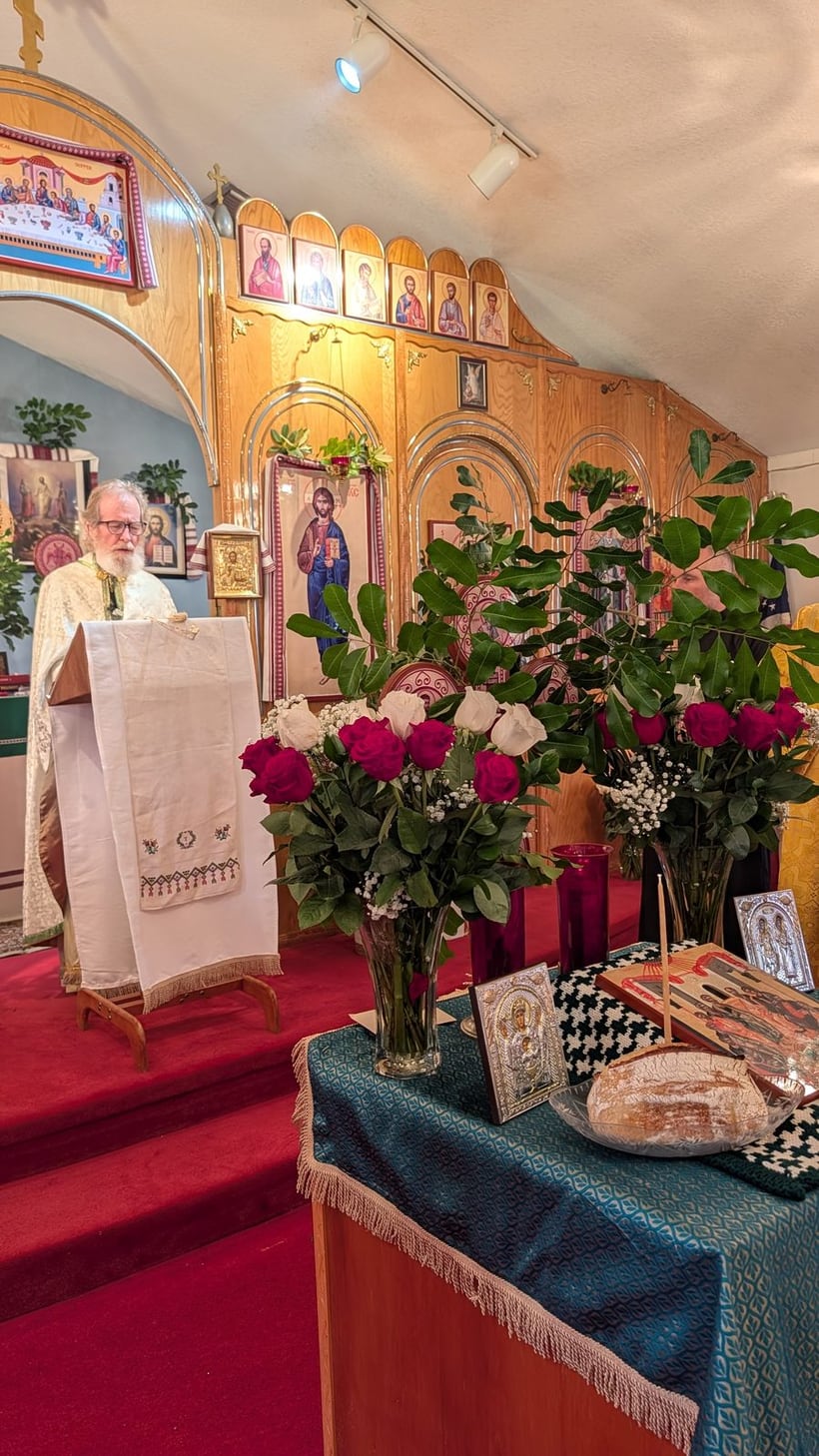
What is the Divine Liturgy?
The word Liturgy comes from the Greek leitourgia, "the work of the people." It is what the Church does together. At its heart is the offering of bread and wine that become the Body and Blood of Christ, given to the faithful for the forgiveness of sins and life everlasting.
The form we use most Sundays, the Liturgy of Saint John Chrysostom, took its final shape in the late fourth century. The Orthodox Church has celebrated it, almost unchanged, for more than sixteen hundred years.
Here it is offered in Ukrainian and English, woven together through the service. Service books with parallel text let you follow in whichever language you prefer.
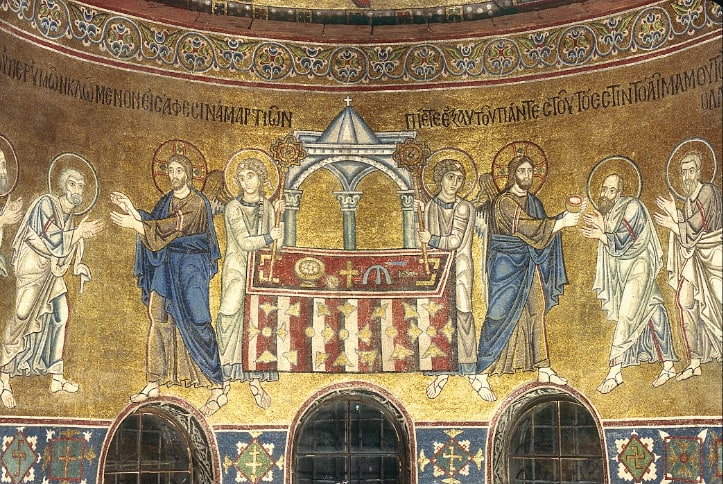
Sunday at St. Michael
Come a little early if you can, light a candle, and find a place. There is no wrong way to begin.
New here? Come this Sunday at 10 AM. Come exactly as you are, and everyone is welcome at our table afterward.
Watch a full Divine Liturgy
If you have never been, this is what a Sunday morning looks and sounds like: a complete Ukrainian Orthodox Divine Liturgy, sung from beginning to end.
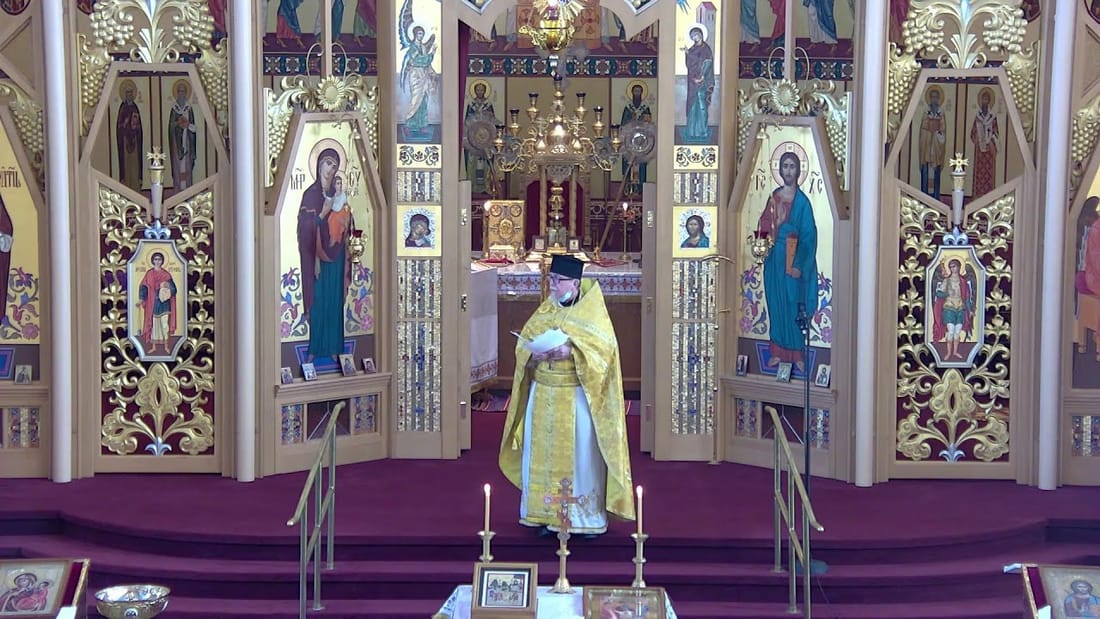
The shape of the Liturgy
The Liturgy unfolds in three movements, rising from preparation, through the Word, to the holy table.
The Proskomedia
Preparation
Before the public service begins, the priest prepares the bread and wine at the table of preparation, cutting small particles from the prosphora and commemorating Christ, the Theotokos, the saints, the living, and the departed.
- •Names you submit are read here
- •Mostly quiet, out of sight of the nave
The Liturgy of the Word
of the Catechumens
The public beginning of the service. It centers on Scripture, prayer, and instruction, and once sent the unbaptized out to be taught.
- •The Great Litany and the Antiphons
- •The Little Entrance with the Gospel
- •The Trisagion: 'Holy God, Holy Mighty, Holy Immortal'
- •The Epistle and Gospel readings, and Fr. Stephen's homily
The Liturgy of the Eucharist
of the Faithful
The heart of the service, the offering and the communion. Heaven and earth meet at the altar.
- •The Great Entrance, the gifts carried to the altar
- •The Nicene Creed, sung together
- •The Anaphora, the great prayer of thanksgiving
- •The Epiclesis: the Holy Spirit is called down and the gifts become the Body and Blood of Christ
- •The Lord's Prayer, Holy Communion, and the antidoron shared with all
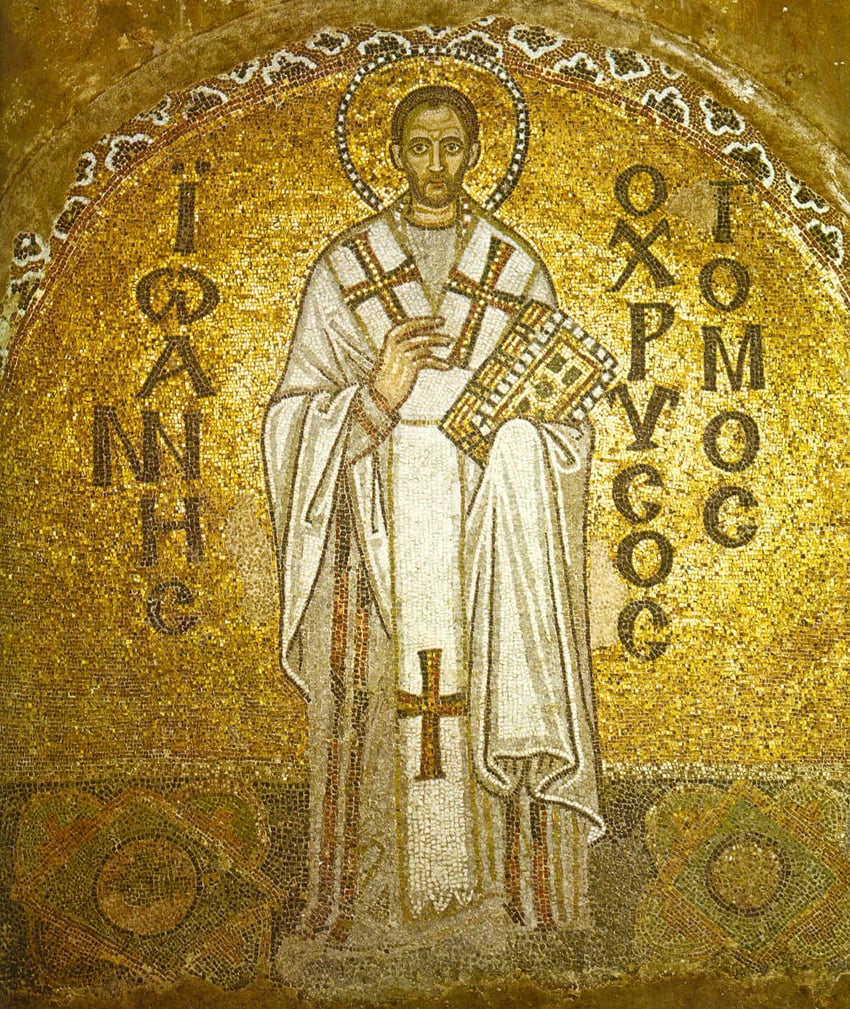
Two Liturgies, two great teachers
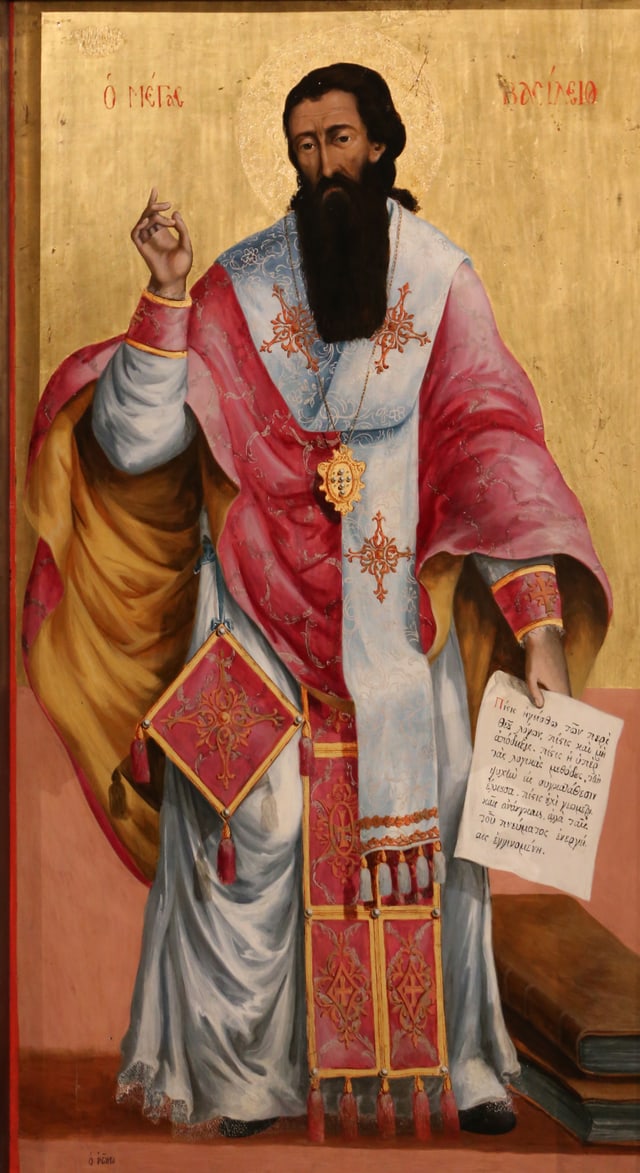
Almost every Sunday we serve the Liturgy of Saint John Chrysostom. A few times a year we serve the longer Liturgy of Saint Basil the Great.
Worship is something you offer
Orthodox worship is not a performance you watch. It is a service you offer together with the priest and the choir. There are many ways to take part.
Stand
The Orthodox tradition is to stand, a sign of attentiveness. We have pews; sit when you need to, stand when you can.
Cross yourself
At every mention of the Holy Trinity and the Gospel. The Orthodox way is right shoulder before left.
Sing
Almost the whole service is sung. The hymns are not only for the choir; join in when you know them.
Light a candle
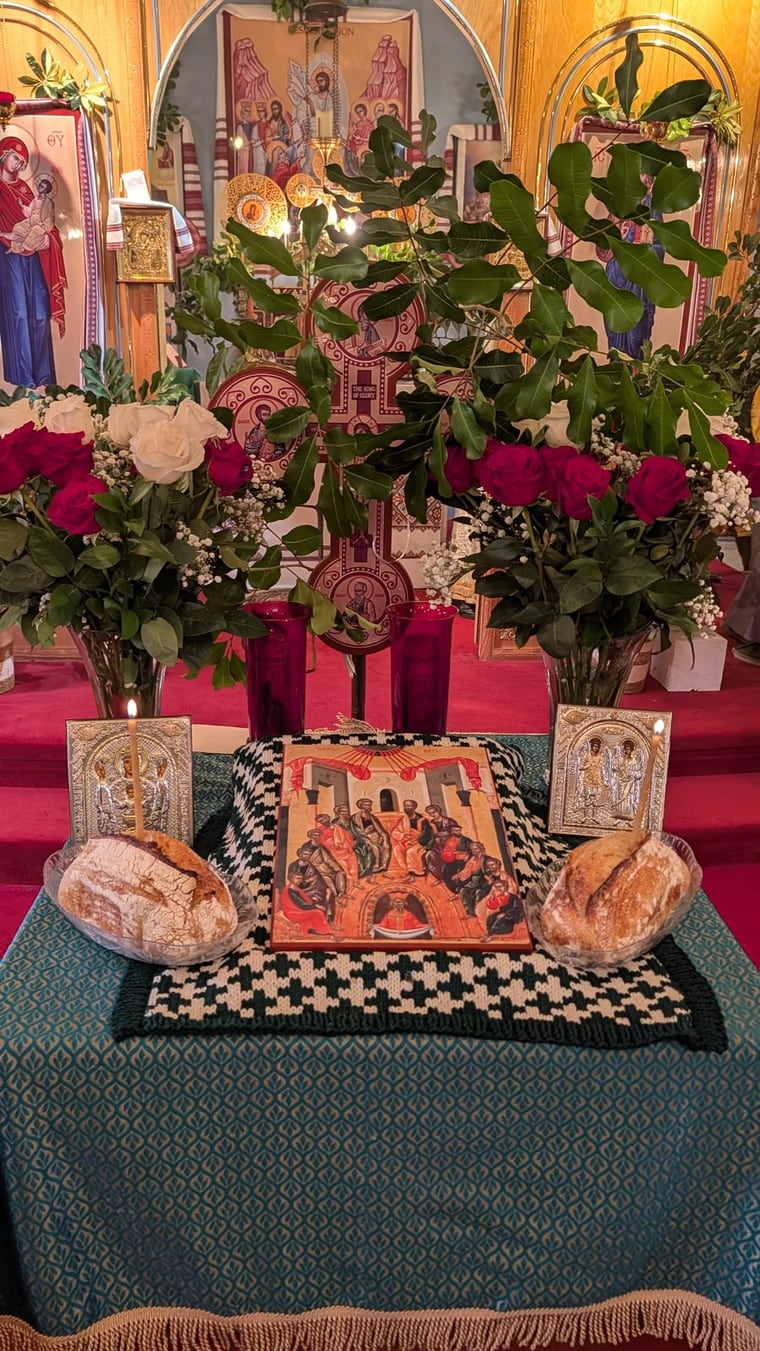
As you enter, you may light a candle before an icon. It is a small offering of prayer.
Venerate the icons
You may kiss the icons of Christ, the Theotokos, and the saints, on the hand or foot, never the face.
Listen, and pray
The Liturgy is full of Scripture. When the priest says 'Let us pray to the Lord,' add your own quiet petitions.
Worship for the whole person
The Liturgy speaks to body and soul together, through every sense.
The icons surround you with Christ, His Mother, and the saints, a window into heaven.
Almost the entire service is sung or chanted, so the words enter the heart, not only the head.
Incense, the prayers of the faithful rising to God (Psalm 141:2).
The sign of the cross, a candle lit, an icon kissed; the body prays with the soul.
The Body and Blood of Christ for the faithful, and the blessed antidoron for everyone at the end.
Receiving Holy Communion
Holy Communion is the deepest moment of the Liturgy, and the Church receives it with care.
If you are Orthodox
Communion is given to Orthodox Christians who have:
- •Baptized and chrismated in the Orthodox Church
- •Recently confessed, or with your priest's blessing
- •Kept the eucharistic fast since midnight
- •Read the appointed pre-Communion prayers
Visiting from another canonical Orthodox jurisdiction? Please speak briefly with Fr. Stephen before the service, and you are welcome at the chalice.
If you are visiting
If you are not Orthodox, please do not approach the chalice. This is not unkindness; it expresses our belief that Communion is the sign of full unity in the faith.
You are warmly welcome to receive the antidoron, the blessed bread shared at the end of the service. Come, and be at home with us.
If this is your first time
What to wear
Modest, respectful clothing; there is no strict dress code. Many dress formally, many do not. Women may cover their heads, but it is not required. Comfortable shoes help, since you will stand a fair amount.
Children
Children are welcome and fully part of the Liturgy. They are baptized, chrismated, and given Communion. They may sit, stand, or whisper a question. If a little one becomes upset, step to the narthex and return when settled.
Arriving and leaving
Try to arrive on time, but if you are late, enter quietly and stand at the back. Do not cross in front of the open Royal Doors. If you must leave early, do so quietly and at a calm moment.
For a fuller walk-through, see our guide for first-time visitors.
Come and see
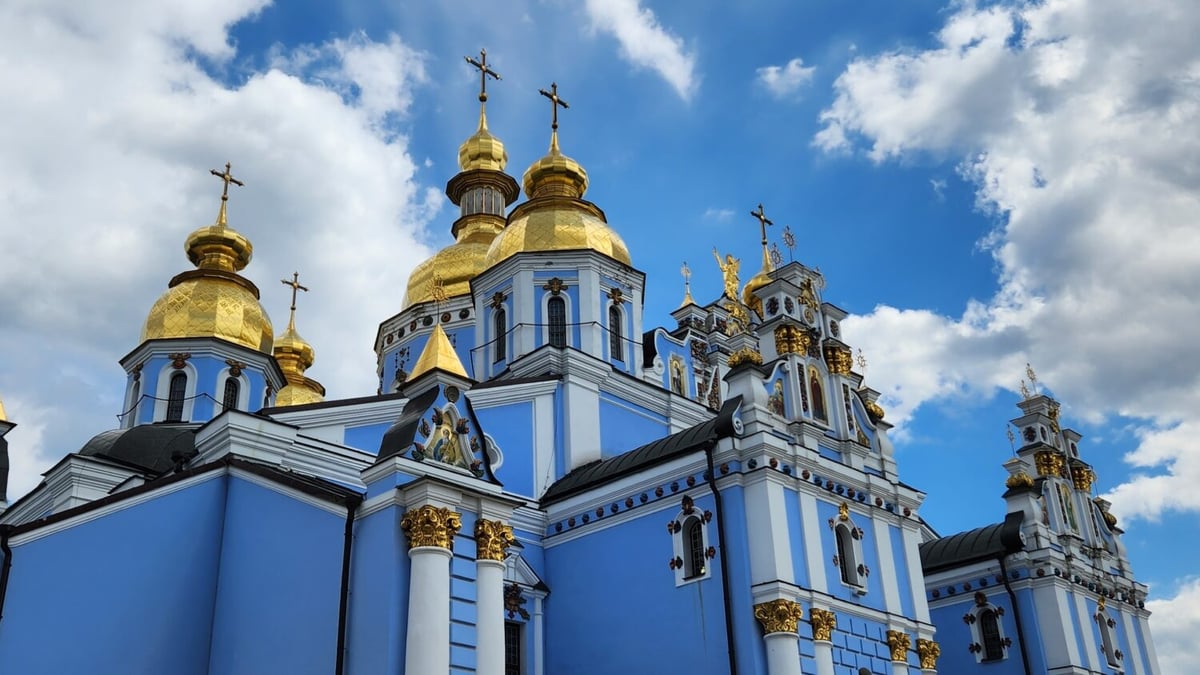
The Liturgy is not a lecture to understand all at once. It is a place to stand, to pray, and to be drawn in slowly, Sunday by Sunday. Come this week, and stay for coffee. You will be among friends.
St. Michael Ukrainian Orthodox Church · 9201 60th St, Pinellas Park, FL 33782 · 727-777-4450
Questions people ask
Can I come if I am not Orthodox?
Yes, always. Anyone may attend the Divine Liturgy and pray. Only Holy Communion is reserved for prepared Orthodox Christians; everything else is open to you, including the blessed bread at the end.
How long is the service?
About 90 minutes for a regular Sunday Liturgy. The services of Holy Week and the Paschal Liturgy are longer.
Do I have to do anything, or know anything?
No. You may simply stand quietly, watch, and pray. No one will single you out. If you would like a service book with parallel Ukrainian and English text, just ask, and someone will help you follow along.
Why does everyone face the same direction?
Because we are all facing God together, not each other. The priest is not performing for the congregation; he is leading us in offering worship toward the altar, which represents God's throne. We face the same way because we are all going to the same place.
Why so much singing?
Almost the entire service is sung or chanted. Singing lets the words sink past the mind and into the heart. Orthodox worship engages every sense: sight, sound, smell, touch, and taste.
Why incense?
Incense is the prayers of the faithful rising to God (Psalm 141:2, Revelation 8:3-4). It fills the church with a visible, breathable sign of holiness.
What is the iconostasis?
The icon screen between the nave, where the people stand, and the altar, where the priest serves. Its central Royal Doors are opened at the great moments of the Liturgy.
Can I take photos?
Not during the service, please. Before or after, ask Fr. Stephen and you are welcome to.
A small glossary
- Proskomedia
- The quiet service of preparation, when the priest sets out the bread and wine and commemorates names.
- Prosphora
- The leavened offering loaf, stamped with a seal, from which the Eucharistic bread is cut.
- Anaphora
- The great Eucharistic prayer of thanksgiving that recalls the whole of salvation history.
- Epiclesis
- The calling down of the Holy Spirit upon the gifts, when the bread and wine become the Body and Blood of Christ.
- Antidoron
- Blessed (not consecrated) bread distributed to everyone at the end, including visitors. From the Greek for 'instead of the gift.'
- Iconostasis
- The icon screen between the nave and the altar, with the Royal Doors at its center.
- Theotokos
- 'God-bearer,' the title of the Virgin Mary, the Mother of God.
- Leitourgia
- Greek for 'the work of the people,' the root of the word Liturgy.