Your First Visit · Перший візит
Your First Visit
You have decided to come on Sunday. We will not spring anything on you. Orthodox worship is unfamiliar to most Americans, but it is not strange or hidden, and people walk into it for the first time every week. Here is exactly what to expect, so you can step through the door with confidence.
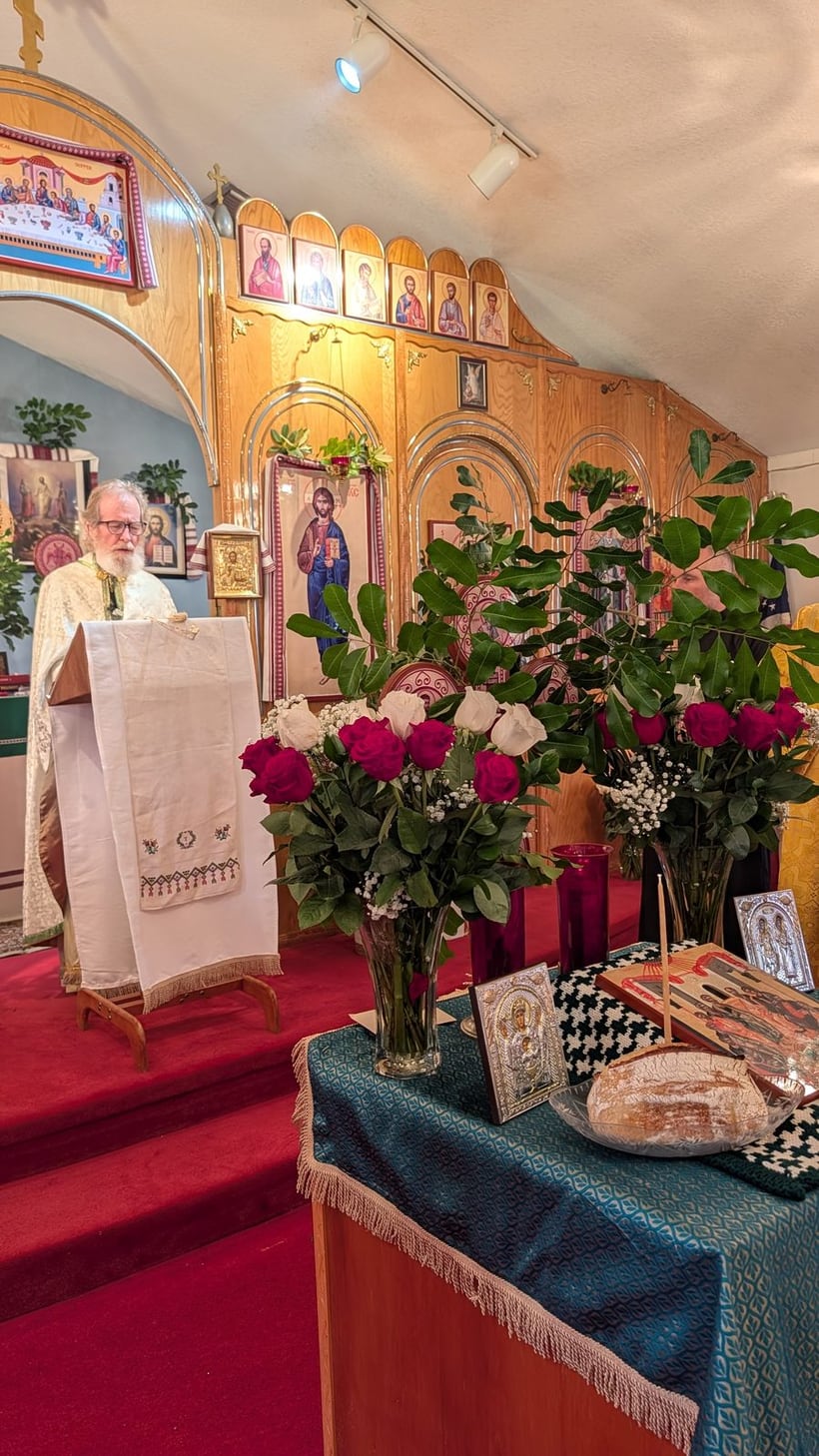
Before you come
A few simple things, so nothing feels uncertain on Sunday morning.
What to wear
Modest and respectful, much like a traditional Sunday service. Slacks and a collared shirt, a dress or skirt or modest pants. Some women cover their heads with a scarf, but it is not required, and you will not stand out either way. Comfortable shoes help; you will stand a fair amount.
When to arrive
The Divine Liturgy begins at 10:00 AM. Come by 9:45 for your first visit, so you can park, enter quietly, and find a place. The Hours and confessions begin at 9:30, and you are welcome to those too.
Where to park
The lot is on-site: free, no permits, no meters. Pull in and park anywhere.
What to bring
Yourself. Your children, if you have them. A non-Orthodox spouse or friend is just as welcome. No book and no preparation are needed; someone will help you follow along.
Coming from somewhere in Tampa Bay? We have directions, parking, and service times ready for you.
When you walk in
Step through the door, and let the morning unfold. Here is the lay of the land.
The narthex
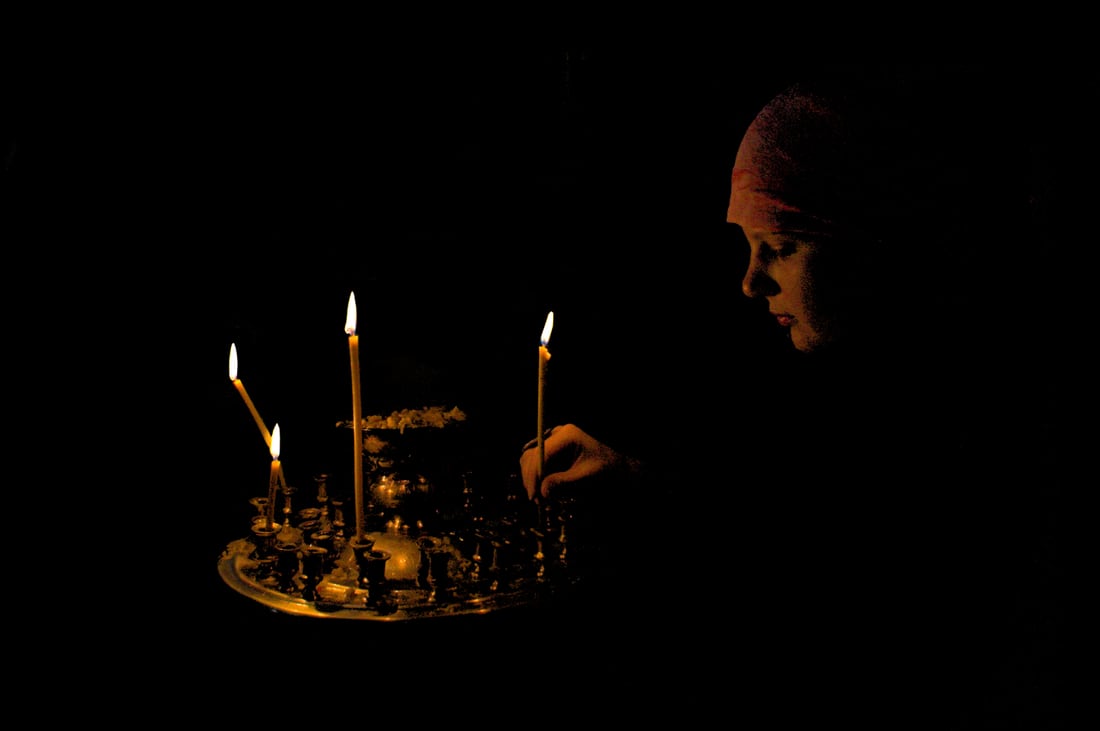
You enter the narthex, the small entry between the world outside and the temple. There is a table of candles; if you wish, take one, light it from another flame, and place it in the sand before an icon. It is a quiet act of prayer, never required, with no set offering.
The nave
Beyond is the nave, the main worship space. Walk in quietly. There are pews along the sides and back. The tradition is to stand for as much as you can, but sit whenever you need to; no one will mind.
The icons
Near the front are icons of Christ, His Mother, and the saints. Many venerate them with a bow or a kiss before the service begins. As a visitor you need not do this. Watch what others do, and follow if you wish.
The sanctuary
The area beyond the iconostasis, the icon screen, is the altar, the place of the priest's service. Visitors do not enter it. Find a spot on either side of the nave; both are equally fine.
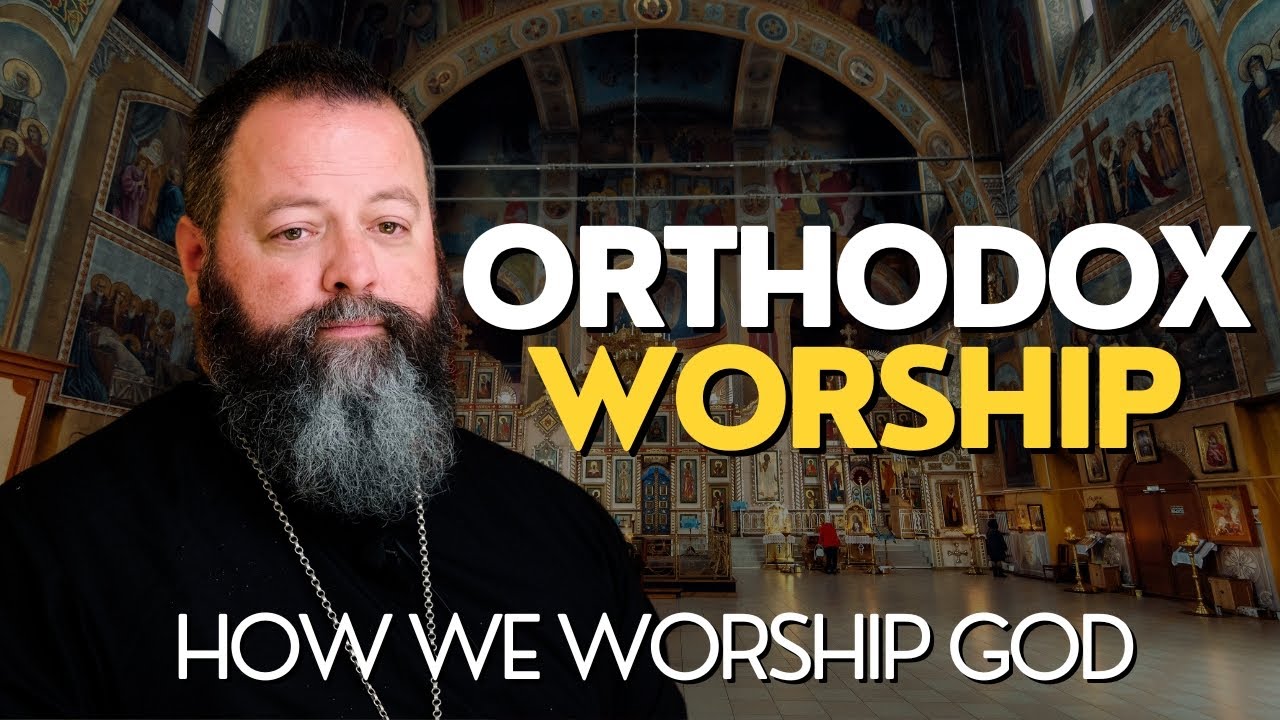
What a Sunday looks like
A priest gently walks a newcomer through Orthodox worship: what you will see, hear, and do on your first visit.
During the Liturgy
The Divine Liturgy lasts about ninety minutes. It is not a sermon-centered service; it is a sustained prayer, led by the priest and the choir, rising toward Holy Communion. You will hear:
Sequences of prayer petitions, to which the choir and people respond, 'Lord, have mercy,' or 'Grant it, O Lord.'
Sung by the choir, with the people joining where they know the music. Ours are bilingual, English and Ukrainian woven together.
A reading from the Epistles and one from the Gospels, read aloud in English, and sometimes also in Ukrainian.
Fr. Stephen's sermon, ten to fifteen minutes in English, reflecting on the day's readings and feast.
The great prayer in which the bread and wine become the Body and Blood of Christ. This is the moment of deepest reverence; stand if you can.
When the Orthodox faithful come forward to receive, followed by the closing prayers, the dismissal, and a final blessing.
Stand for as much as you comfortably can, especially during the Anaphora and Communion, and sit when you need to. There is no judgment, only welcome.
What to do at Communion
When the time for Holy Communion comes, the Orthodox faithful form a line down the center aisle to receive from the chalice.
If you are visiting
Please do not approach for Communion. This is not exclusion. The Eucharist expresses full unity of faith and life with the Orthodox Church, a unity not yet formally established between you and the Church. We hope it will be, one day.
What you may receive
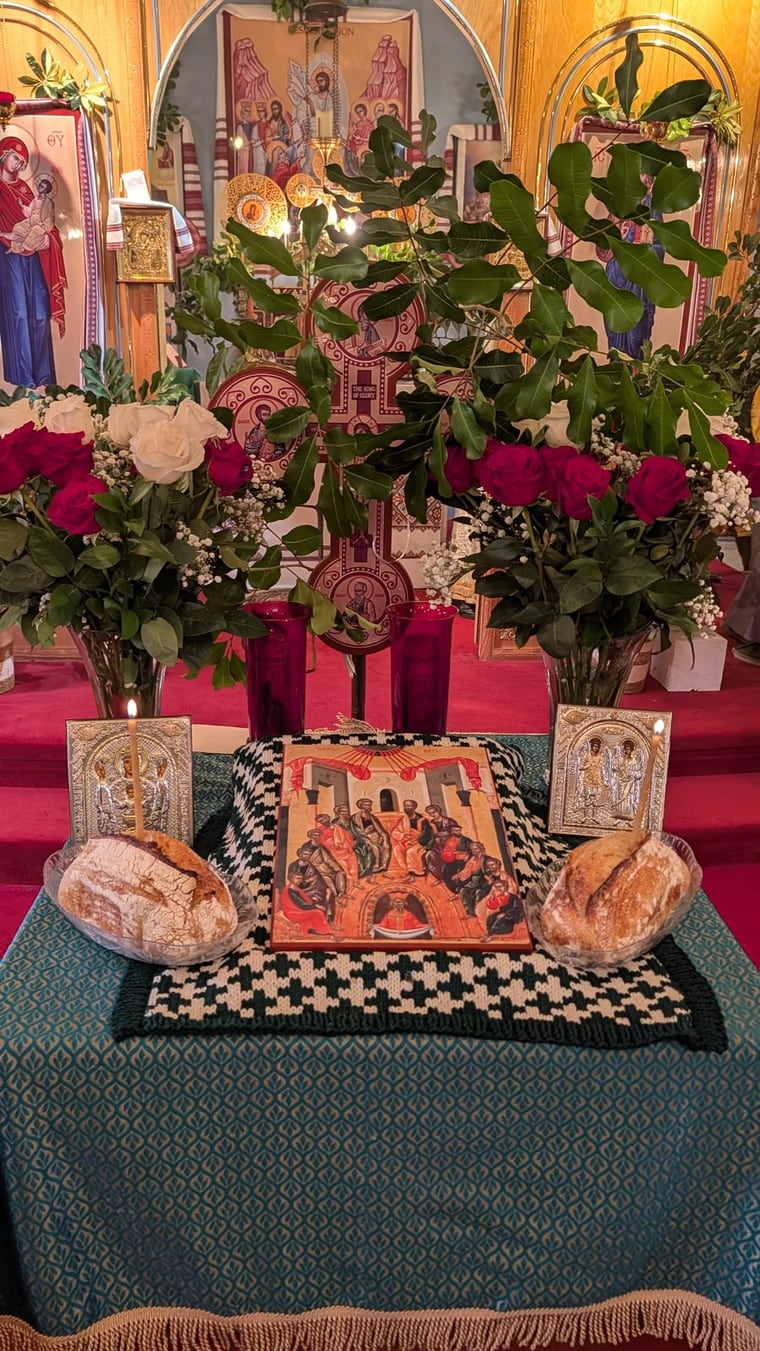
When Communion ends, the priest offers antidoron, blessed bread shared with everyone. Come forward, receive it in your hands, eat it, and return to your place. It is a sign of welcome, even when full Communion is not yet possible.
More on our Holy Communion page.
After the service: please stay
The Liturgy ends with a final blessing, and the people come forward to venerate the cross. Then most of the parish moves to the hall for coffee hour, a casual time of food, conversation, and welcome.
As a visitor, please come. This is where you will meet people, ask your questions, and be welcomed by name. Fr. Stephen makes a point of finding newcomers; please introduce yourself. There is no obligation to stay the whole time, and none to give, though a basket is set out for those who wish to support the parish.
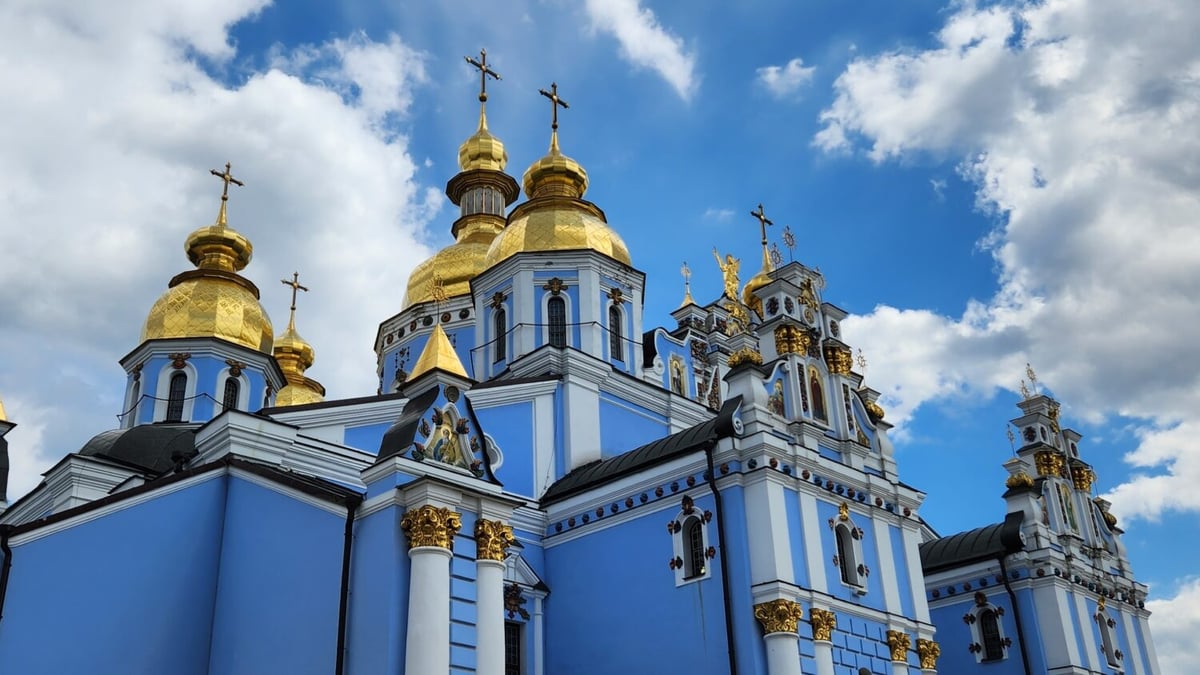
We will see you Sunday
Sunday Divine Liturgy at 10:00 AM; arrive by 9:45 if it is your first time. Hours and confessions at 9:30, coffee hour after. Come exactly as you are. Christ is in our midst.
St. Michael Ukrainian Orthodox Church · 9201 60th St, Pinellas Park, FL 33782 · 727-777-4450
Questions people ask
Do I have to fast before coming?
No. Communicants traditionally fast from food and drink from midnight before receiving Holy Communion, but as a non-communicating visitor you have no fasting obligation at all. Come as you are.
Can I take pictures?
Please, no flash photography during the service, and no recording or live-streaming of the Liturgy. Before or after, ask Fr. Stephen, and he will gladly say what is welcome.
What if my children are loud or fussy?
Children are welcome and are meant to be part of the Liturgy. If a little one becomes upset, the narthex is a fine place to step out and settle, then return. No one will judge you, and we have no separate 'children's church'; the children belong with the parish family.
Do I have to say anything?
No. You may be entirely silent for the whole service if you prefer. Following along quietly is a perfectly normal way to experience the Liturgy for the first time.
What if I do not understand the Ukrainian parts?
That is fine. The English portions are substantial, and the shape of the Liturgy is steady enough that you will follow along. Many parishioners do not catch every Ukrainian phrase either; the meaning is in the prayer, not in the comprehension.
A small glossary
- Narthex
- The entry area between the outside and the nave, where the candle stand is, and where you may step out with a child.
- Nave
- The main body of the church where the people stand and pray, before the icon screen.
- Iconostasis
- The screen of icons between the nave and the altar, with the Royal Doors at its center.
- Antidoron
- Blessed (not consecrated) bread shared with everyone at the end of the service, Orthodox and visitor alike.
- Homily
- The sermon, a short reflection by the priest on the day's Scripture readings and the feast.
- Litany
- A set of short prayer petitions led by the priest or deacon, answered by all with 'Lord, have mercy.'