The Holy Mysteries · Святе Причастя
Holy Communion
At the heart of Orthodox life is the chalice: bread and wine that become the Body and Blood of Christ, given for the forgiveness of sins and life everlasting. Here is what we believe, who may receive, and the blessed bread we share with everyone who comes.
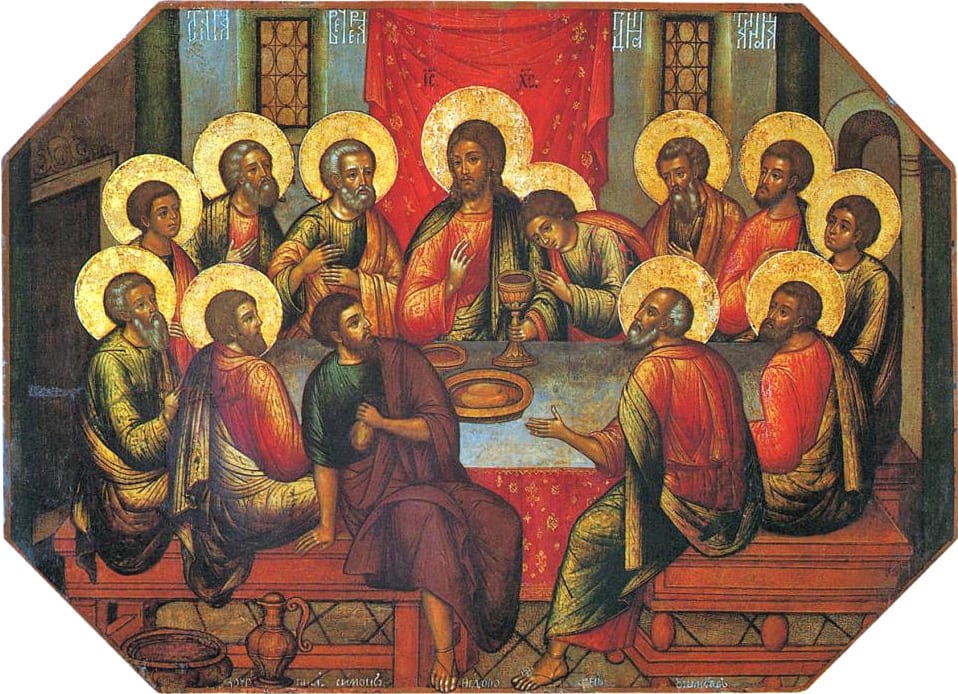
What Orthodox believe about the Eucharist
The night before He suffered, Christ took bread and wine, gave thanks, and said, "This is My Body" and "This is My Blood." The Orthodox Church has done exactly this ever since, at every Divine Liturgy, in every generation.
During the Liturgy the bread and wine offered on the altar are consecrated by the Holy Spirit and become the very Body and Blood of Christ. This is not a symbol and not a metaphor. It is a real change, called in Greek metabole. To receive Communion is to receive Christ Himself, given on a spoon, for the forgiveness of sins and life everlasting.
The Eucharist is also the visible sign of the Church's unity. To share one chalice is to share one faith, one life, one body. That is why the gift is given with such care, and why it means so much.
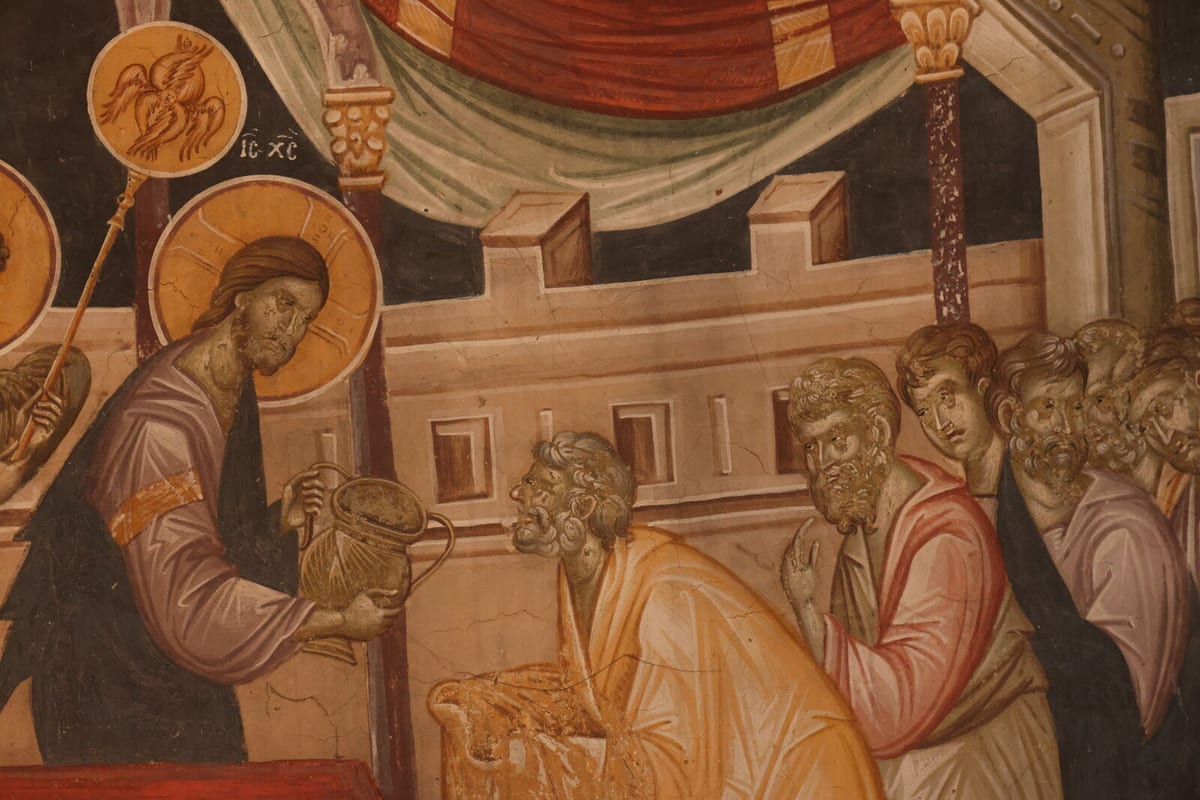
When we receive
Holy Communion is given near the end of every Sunday Divine Liturgy. Come a little early, light a candle, and find a place.
Not Orthodox, or just exploring? You are welcome at every part of the service, and at the blessed bread afterward. Come exactly as you are.
The Orthodox Christian and the Eucharist
A short, warm explanation of what the chalice is, why it stands at the center of the Christian life, and how the faithful come to receive it.
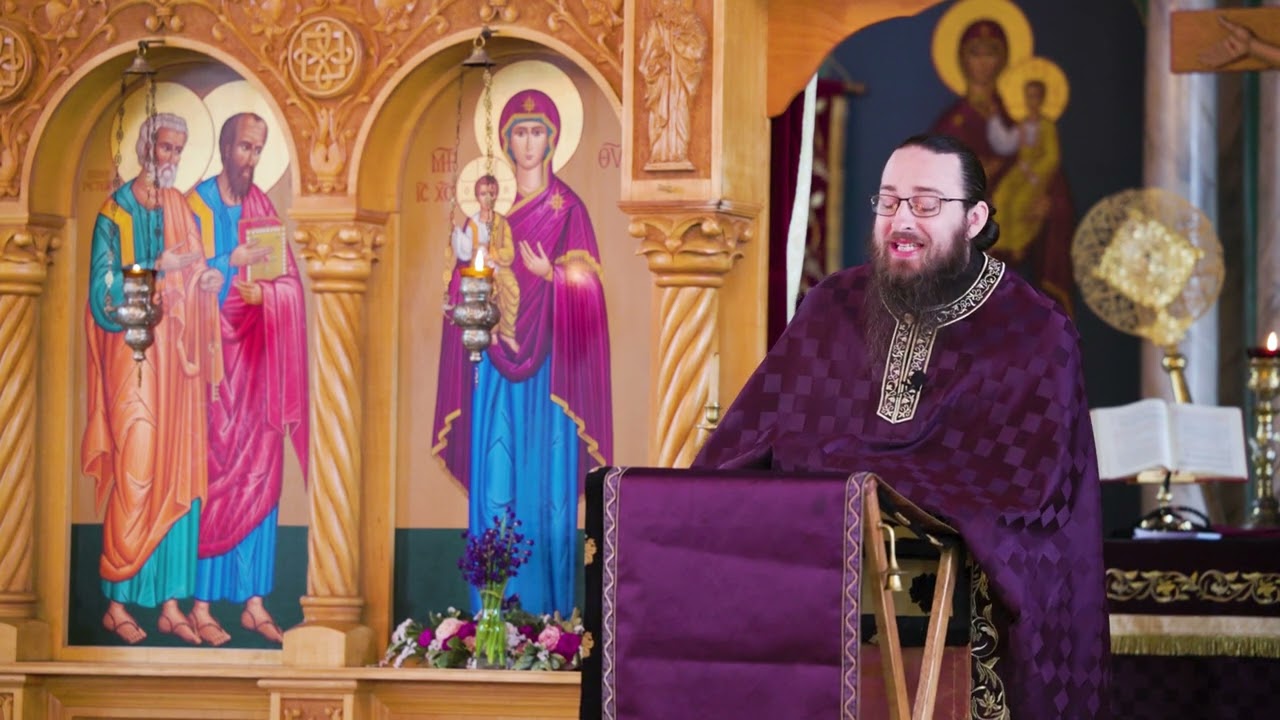
Who receives Holy Communion
Communion is given to the baptized and chrismated faithful of the canonical Orthodox Church, in good standing and prepared to receive.
Yes, come to the chalice
- ✓Orthodox Christians of any canonical jurisdiction, since we are all in full communion: Greek, Ukrainian, Antiochian, Serbian, Russian, OCA, and the rest.
- ✓Those who have prepared by prayer, fasting, and recent confession.
- ✓Orthodox children, from infancy, baptized and chrismated.
Not yet, but warmly welcome
- •Catechumens, those enrolled but not yet received, are blessed instead, and look forward to the chalice on the day they are received.
- •Catholic, Protestant, and other Christians do not yet receive, because the chalice is the sign of a unity not yet shared.
- •Inquirers and visitors are welcomed in every other way, and share the blessed bread at the end.
If you are visiting, you are welcome
This is often the question that surprises a newcomer, so let us answer it gently and honestly.
Why we do not yet share the chalice
We do not believe our Catholic and Protestant friends are anything less than Christians, or less than loved by God. We pray constantly for the day when all who confess Christ are one.
But the Eucharist is the embodied sign of that unity, not only an inspiring moment. To share it where the unity of faith and life has not been established would be to enact a unity that is not yet real. We do not want to make that sign falsely.
If you long to receive, the path is open: it is to become Orthodox, and we would walk it with you gladly.
What everyone receives: the antidoron
When Communion ends, the priest offers antidoron, bread that has been blessed but not consecrated. It is shared with everyone present.
- 1.Come forward to the priest holding the basket.
- 2.Hold out your hands, right over left.
- 3.Receive the bread and eat it.
- 4.Return to your place.
Unsure whether to come forward? Look around; most everyone receives it, and no one will mind either way.
How the faithful prepare
For Orthodox parishioners, preparing to receive is real work, but it is not crushing. It is the loving readiness of a guest invited to the King's table.
Prayer
The night before, pray the Pre-Communion Prayers from any Orthodox prayer book. Read as many of the canons as you can carry; let the words settle your heart.
Fasting
By tradition we fast from all food and drink from midnight before receiving. Speak with Fr. Stephen about medical needs, young children, and nursing or expecting mothers.
Confession
Approach the chalice with a clear conscience. Most of us confess on a regular rhythm, weekly, monthly, or by season. Fr. Stephen will help you find yours.
Reconciliation
If you are at odds with anyone, do what you can to make peace first. The Lord's words in Matthew 5 are taken seriously: be reconciled, then offer your gift.
Disposition
Come with humility, with awareness of your sins, and with gratitude. The chalice is never routine. It is the most sacred moment of the week.
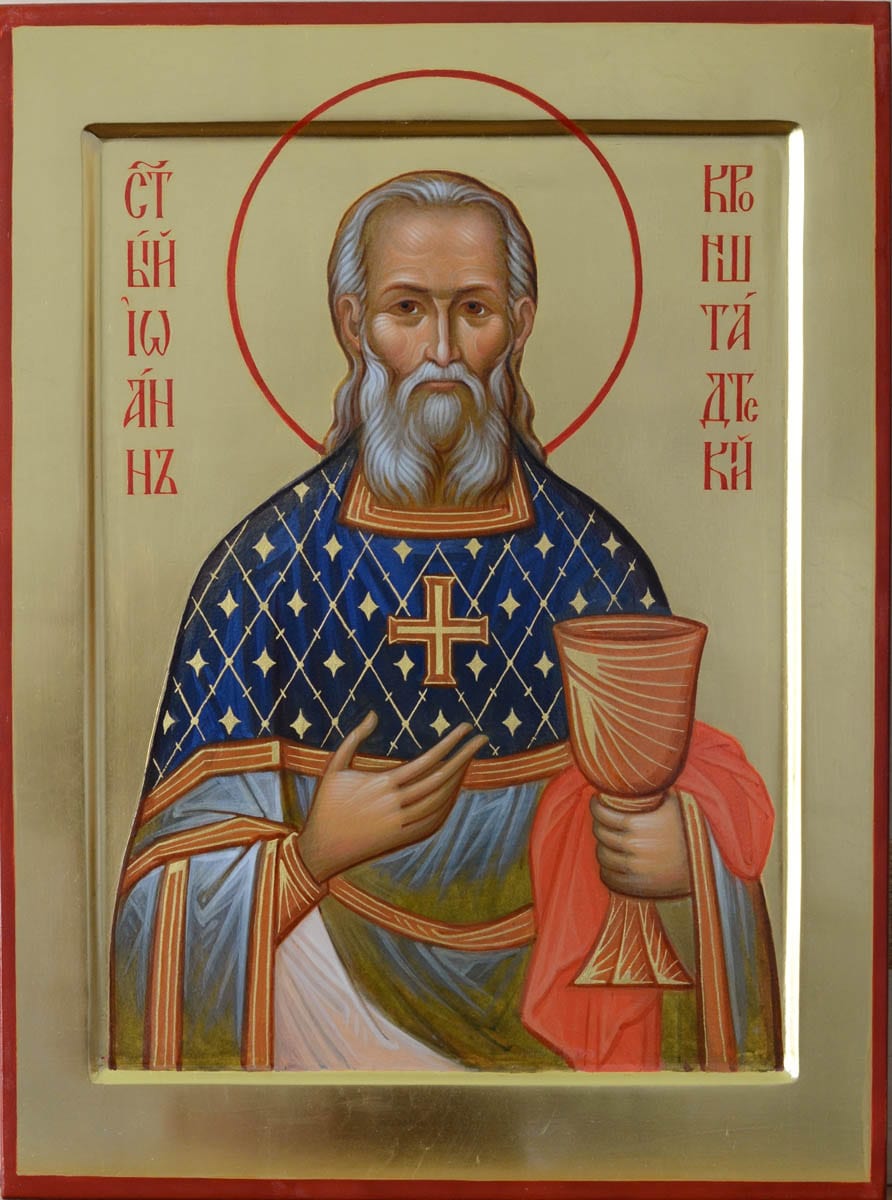
At the chalice, step by step
So that nothing feels strange, here is how Communion unfolds at St. Michael.
The line forms
After the priest's own Communion, the faithful come forward down the center aisle, arms crossed over the chest in the form of a cross. Children come first, then the rest of the faithful.
Approach the chalice
When it is your turn, come to Fr. Stephen, who holds the chalice. Tell him your Christian name, tip your head back, and open your mouth. A server holds a red cloth, the plat, beneath your chin.
Receive
Fr. Stephen prays, 'The servant of God [name] partakes of the precious Body and Blood of Christ, for the forgiveness of sins and life everlasting,' and places the gift on your tongue from the spoon.
Return
Do not turn your back to the chalice. Step to the side, kiss the base of the chalice as a sign of reverence, and return to your place.
Afterward
Many then go to the side table for antidoron and a little warm wine, the zapivka. It helps you swallow and gently returns the body to ordinary food after the holy gift.
Children receive too
Orthodox children are baptized and chrismated as infants, and they receive Holy Communion from that same day. There is no separate "First Communion" milestone years later, as in the Roman Catholic Church. Babies in arms receive a small drop of the gift from the spoon.
So at every Liturgy you will see infants and small children coming to the chalice. This is intentional. Communion is not a reward for understanding; it is the gift that builds understanding across a whole life. The children belong at the table from the beginning.

Come to the table
Whether you come to receive or simply to pray and watch, there is a place for you this Sunday. Stay for the blessed bread and the coffee afterward. You will be among friends.
St. Michael Ukrainian Orthodox Church · 9201 60th St, Pinellas Park, FL 33782 · 727-777-4450
Questions people ask
I am a baptized Christian. Why can I not receive Communion?
Not out of any doubt about your faith or love for Christ. The Orthodox Church receives the Eucharist as the sign of full unity in one faith, one life, one Church. To share the chalice together is to declare that unity already exists. Where it has not yet been established, we would be enacting a unity we do not yet share. We do not want to make that sign falsely. If you long to receive, the path is to become Orthodox, and we would be honored to walk it with you.
What is antidoron, and may I receive it?
Yes, gladly. Antidoron is bread that has been blessed but not consecrated. The word means 'instead of the gift.' At the end of the Liturgy the priest offers it to everyone present, Orthodox and visitor alike. Come forward, hold out your hands right over left, receive it, and eat. It is the Church's way of saying we are glad you are here.
Do I have to fast before Communion?
Orthodox communicants traditionally fast from food and drink from midnight before receiving. This is for the prepared faithful, not for visitors. Pastoral allowance is made for medical needs, the elderly, young children, and nursing or expecting mothers. If you are Orthodox and have questions, ask Fr. Stephen.
How often should an Orthodox Christian receive?
The early Church received at every Liturgy, and that remains the ideal. Saint John of Kronstadt and many modern fathers urged frequent Communion joined to frequent confession and honest preparation. Work out a faithful rhythm with your spiritual father.
Why do you give Communion to babies?
Orthodox children are baptized and chrismated as infants, and they receive Holy Communion from that day on. There is no separate 'First Communion' later. Communion is not a reward for understanding; it is the gift that forms understanding over a whole life. Infants receive a small drop from the spoon.
Is the shared spoon sanitary?
Orthodox Christians have communed from a common spoon for many centuries. We receive the chalice in faith, as the Body and Blood of the Lord and the medicine of immortality. If you have a specific health concern, speak quietly with Fr. Stephen, who will care for you.
I am Orthodox but visiting from another parish. May I receive here?
Yes, you are welcome at the chalice, provided you have prepared as your home parish expects. If you are visiting from another canonical jurisdiction, a brief word with Fr. Stephen before the service is appreciated.
I am a catechumen. Do I receive yet?
Not yet. Catechumens are blessed and prayed for, and they take their full place at the chalice on the day they are received into the Church. That day is coming; please introduce yourself to Fr. Stephen so he can prepare you for it.
A small glossary
- Eucharist
- From the Greek for 'thanksgiving.' The Body and Blood of Christ, and the whole Liturgy that offers them.
- Metabole
- Greek for 'change.' The Orthodox word for the bread and wine truly becoming the Body and Blood of Christ.
- Anaphora
- The great Eucharistic prayer of thanksgiving at the heart of the Liturgy, during which the gifts are consecrated.
- Epiclesis
- The calling down of the Holy Spirit upon the gifts, when bread and wine become the Body and Blood of Christ.
- Antidoron
- Blessed but not consecrated bread shared with everyone at the end, including visitors. Greek for 'instead of the gift.'
- Plat
- The red communion cloth held beneath the chin of each communicant to honor and protect the holy gift.
- Zapivka
- A little warm wine and water taken after Communion, to help swallow the gift and return gently to ordinary food.
- Prosphora
- The leavened offering loaf, stamped with a seal, from which the Eucharistic bread is cut at the preparation.