Orthodox Prayer · Chotki · Чотки
The Orthodox Prayer Rope
A knotted rope. A single prayer. The oldest tool of Christian prayer still in daily use, and one of the simplest ways to begin a life of unceasing prayer.
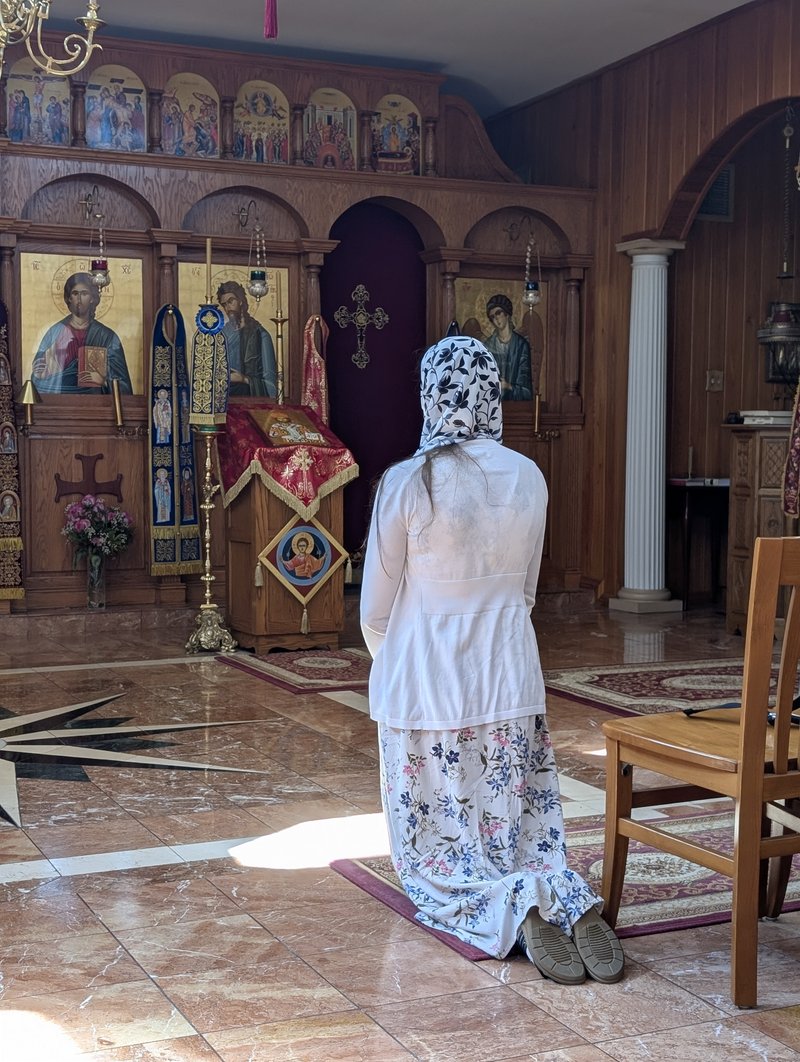
What is a prayer rope?
A prayer rope is a closed loop of knotted wool used to count repetitions of the Jesus Prayer. In the Slavic tradition it is the chotki (чотки); among the Greeks the komboskini; among the Serbs the broyanitsa.
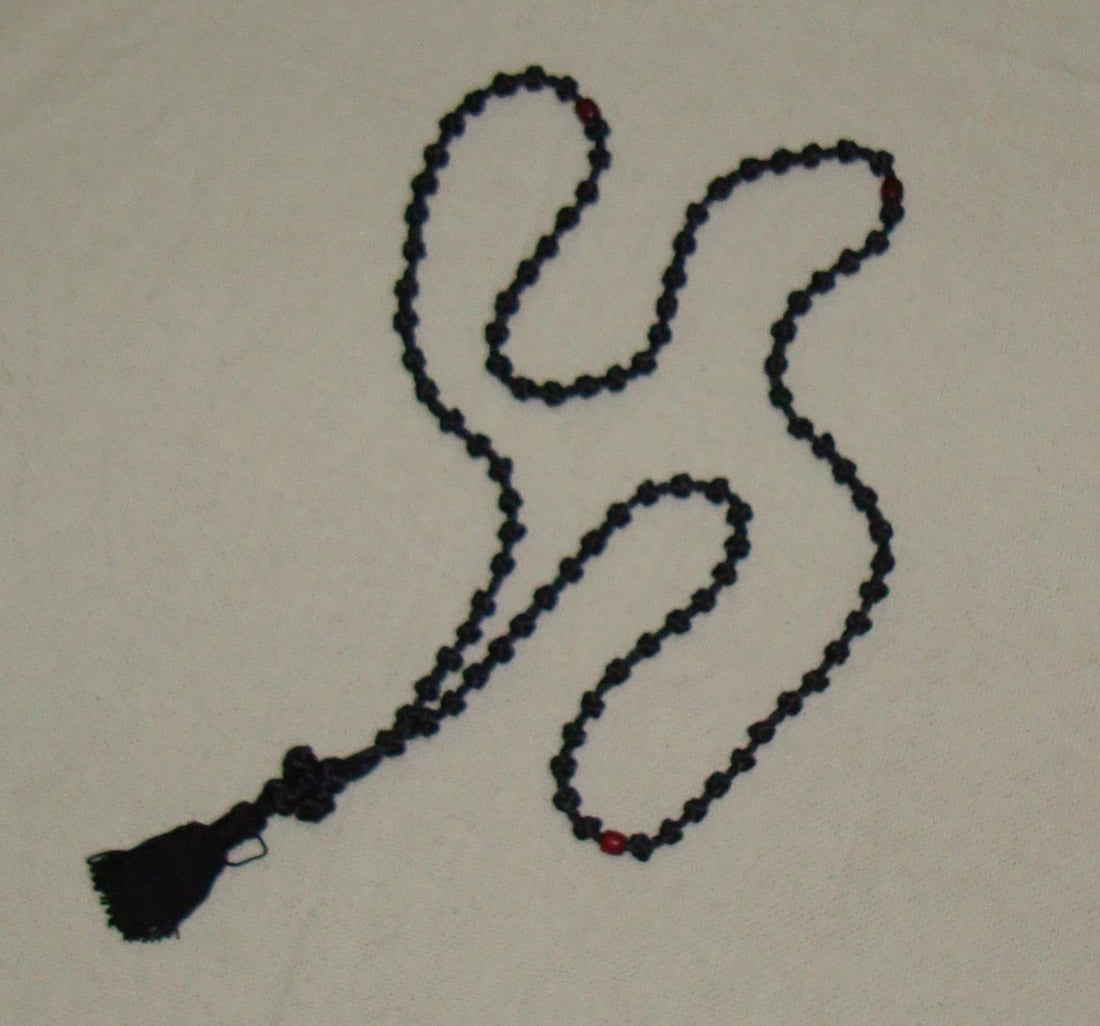
It is usually black, the color of repentance, and made of wool, which slides silently through the fingers. A small woven cross marks the start of the loop. It is a tool, not an amulet, and one of the oldest objects in continuous Christian use.
Its whole purpose is to free the mind from counting so the heart can give itself to the prayer. You do not watch the knots; you let your fingers find them while your attention rests on the words.
Even the materials preach
Nothing about the rope is accidental. Its silence, its texture, and its color all teach the same lesson.
Wool is silent
A bead clicking against a bead can become a kind of performance, even to yourself. Wool slides without a sound, so the prayer is announced to no one.
Knots are felt, not seen
Your fingers find each knot by touch, so your eyes can stay closed and your mind can stay on the words. The body prays along with you.
Black is for repentance
The traditional color is the black of mourning and repentance, a quiet reminder of why we keep asking, again and again, for mercy.
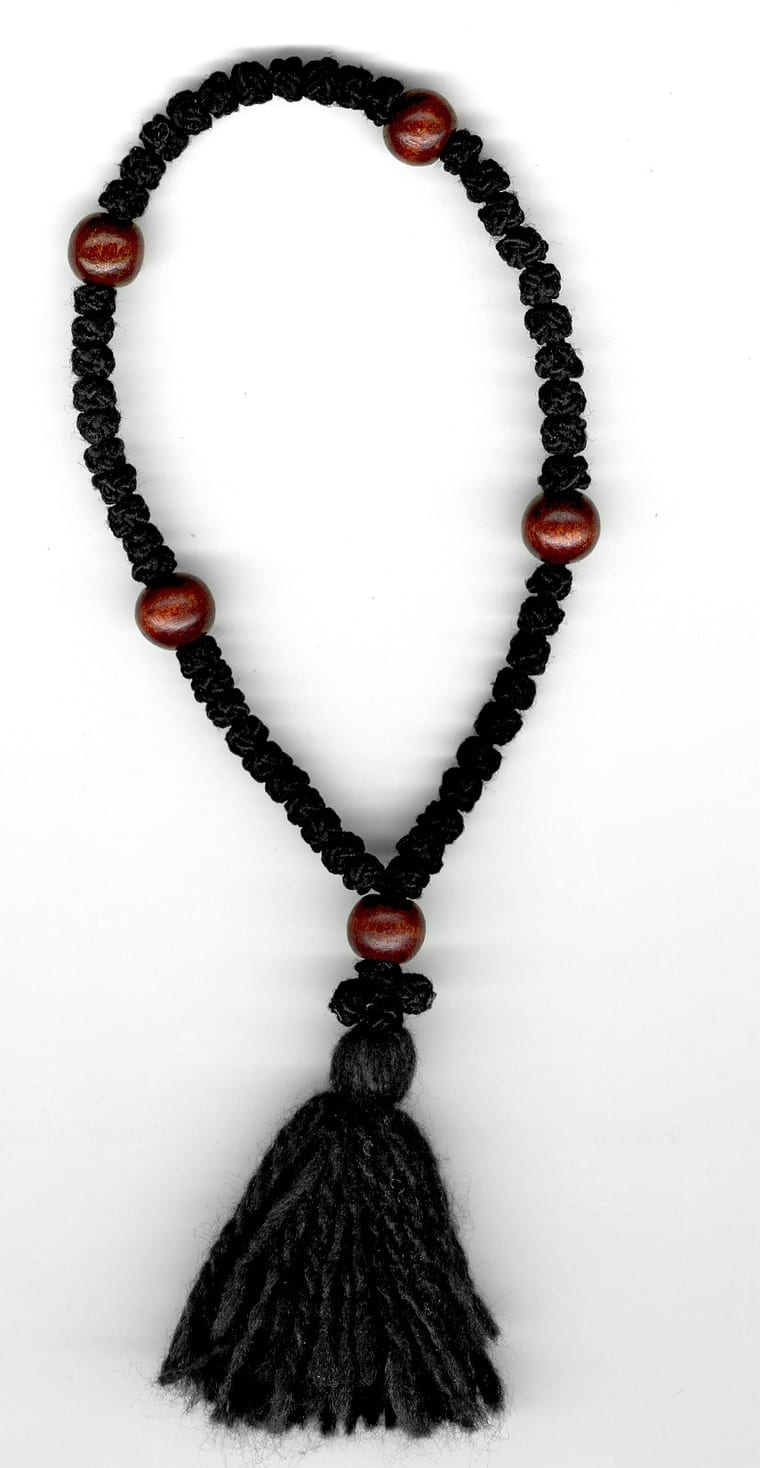
Want a prayer rope? Ask after the Divine Liturgy, or reach out and we will help you choose your first one.
Straight from the Gospel
The prayer is woven from Scripture
Every word of the Jesus Prayer is drawn from the New Testament. When you pray it, you are praying the cries of the Gospel back to God.
“Pray without ceasing.”
1 Thessalonians 5:17
Saint Paul's command, and the whole reason the prayer rope exists. The rope is simply a way to begin obeying it.
“God, be merciful to me, a sinner.”
Luke 18:13
The prayer of the publican, who would not lift his eyes to heaven. The Jesus Prayer ends with his very words.
“Jesus, Son of David, have mercy on me!”
Mark 10:47
The cry of blind Bartimaeus by the roadside. From his cry comes the heart of the prayer: 'have mercy on me.'
The prayer the rope is made for
“Lord Jesus Christ, Son of God, have mercy on me, a sinner.”
Господи Ісусе Христе, Сину Божий, помилуй мене грішного.
When even these words are too many, the prayer may be shortened: "Lord Jesus Christ, have mercy on me," or simply, "Lord, have mercy." A few true words are a whole prayer.
From the lips to the heart
The fathers describe three stages the prayer may pass through. You do not force the next one. You simply keep praying, and let God lead.
Prayer of the lips
You say the words aloud, or under your breath, with deliberate effort. The mind wanders; you bring it back. This is where everyone begins, and there is no shame in staying here for years.
Prayer of the mind
The words grow quiet and inward. You no longer need to move your lips. The prayer is held in the attention, said in the silence of thought, returning whenever the mind drifts.
Prayer of the heart
The prayer seems to pray itself, continuing in the heart even as you work or rest. This is not a technique you achieve; it is a gift God gives to the humble. Do not chase it. Simply pray.
Born in the desert
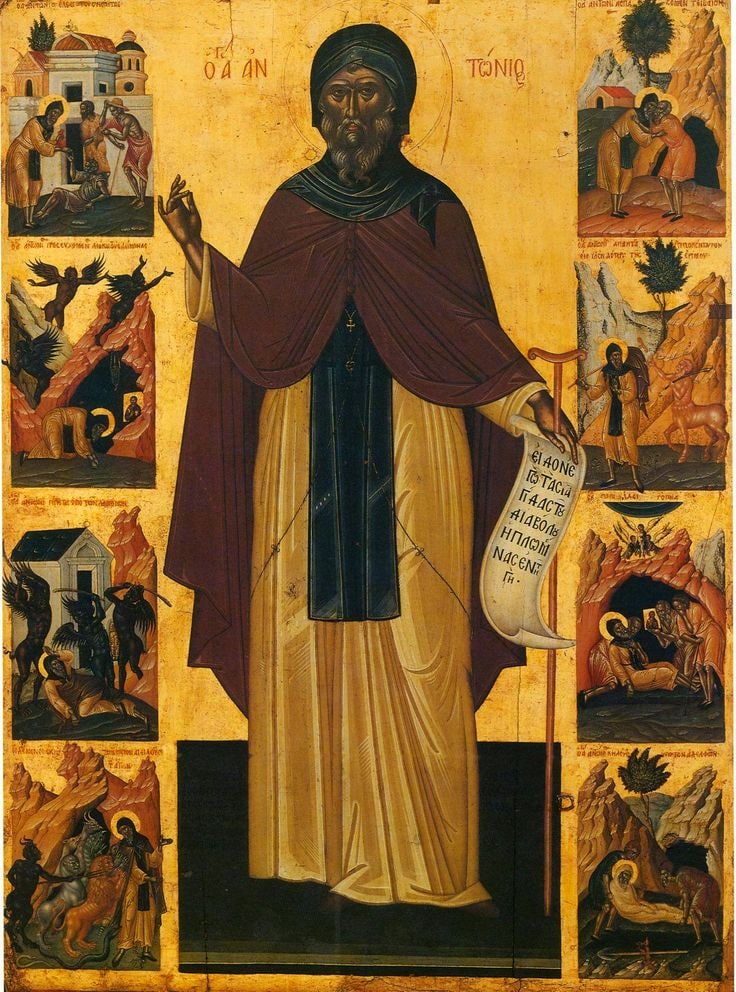
The prayer rope was born in the deserts of fourth-century Egypt, among the first Christian monks who left the cities to pray without ceasing. They needed a way to keep count of their prayers without taking their attention off God.
An old story tells of a desert monk, often named as Saint Anthony the Great himself, who kept tying knots to count his prayers only to find them undone each morning by the devil. An angel appeared and showed him a knot woven of seven small crosses that the evil one could not undo. To this day every knot is tied in that same pattern, and the tradition says each knot binds a temptation.
So the rope is not merely a counter. It is a small inheritance from the desert, placed in your hand, joining your prayer this morning to the prayer of monks sixteen centuries ago.
The ladder of ascent
In the seventh century, Saint John Climacus, abbot of the monastery at Sinai, wrote The Ladder of Divine Ascent, picturing the spiritual life as a ladder of thirty rungs rising toward Christ. In the famous icon, monks climb steadily upward while dark temptations try to pull them off into the mouth of the dragon below.
The Jesus Prayer is the rung beneath your feet: one short, humble step, repeated, that carries you upward when nothing grand will. You do not leap to the top. You take the next small step, and then the next.
“Let the remembrance of Jesus be present with your every breath. Then indeed you will appreciate the value of stillness.”
Saint John Climacus, The Ladder of Divine Ascent
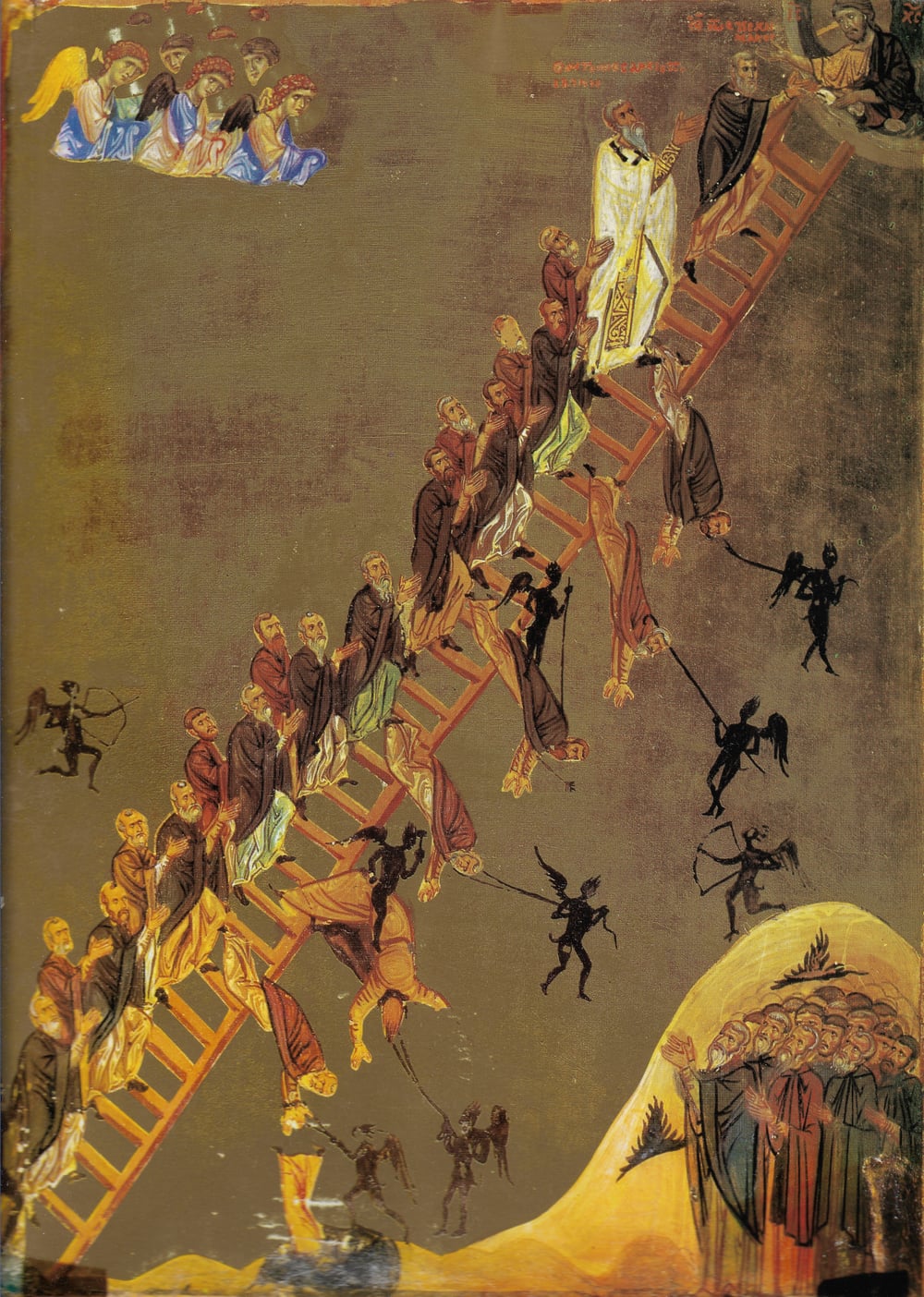
Sixteen centuries, one prayer
- 4th century The Egyptian desert
The first Christian monks withdraw to the desert to 'pray without ceasing.' To keep count without distraction, they tie knots in a cord. Tradition says an angel taught the monk the seven-cross knot the devil could not undo.
- 7th century Mount Sinai
Saint John Climacus, abbot of the monastery at Sinai, writes The Ladder of Divine Ascent. The short prayer becomes, in his words, the breath of the monastic life.
- 14th century Mount Athos
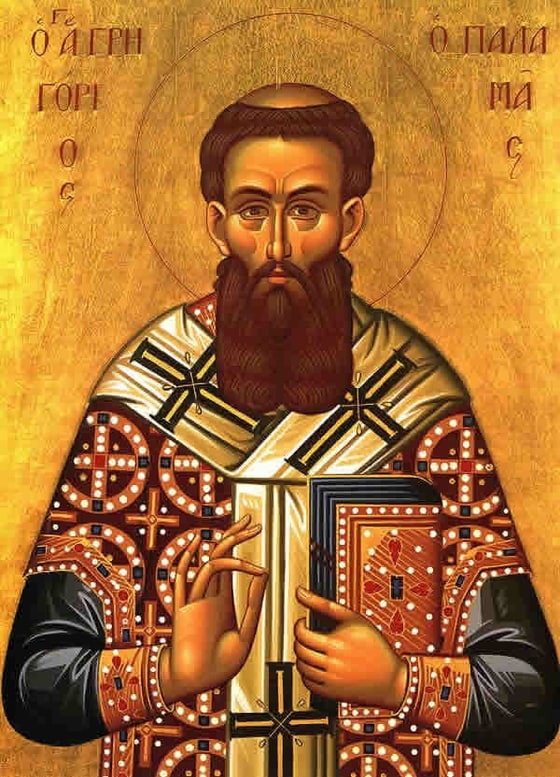
Saint Gregory Palamas defends the hesychasts, the monks of stillness, who pray the Jesus Prayer in the heart. The Church affirms that this prayer truly unites a person to the living God.
- 1782 Venice
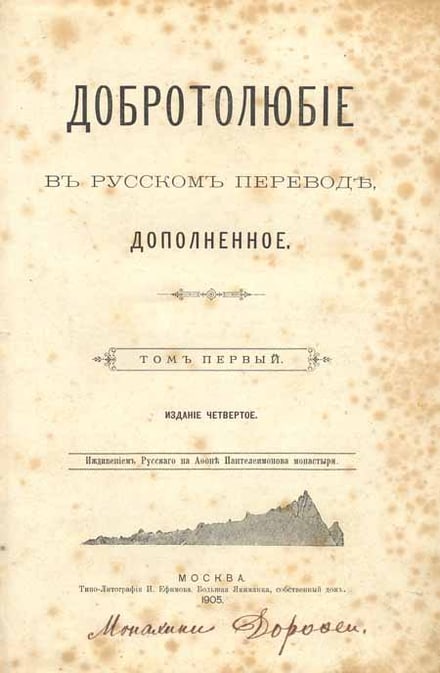
The Philokalia is published, a vast collection of the fathers on prayer of the heart, gathered by Saints Macarius of Corinth and Nikodemos of the Holy Mountain. It carries the desert's wisdom to the whole Orthodox world.
- 19th century Russia
An anonymous classic, The Way of a Pilgrim, tells of a wanderer who learns to pray without ceasing. The book spreads the Jesus Prayer far beyond the monasteries, into ordinary homes.
- Today Pinellas Park, Florida
The same prayer, on the same knotted wool, is prayed in our parish and in your hands. Sixteen centuries have not worn it out. It is waiting for you to begin.
The prayer of the heart
By the fourteenth century, the monks of Mount Athos had carried this prayer to its depths. They were called hesychasts, from the Greek word for stillness. When some doubted whether such simple prayer could truly unite a person to God, Saint Gregory Palamas defended them, and the Church affirmed that in this prayer the faithful really do touch the living God.
Four centuries later, in 1782, this wisdom was gathered into the Philokalia, a great anthology of the fathers on prayer of the heart. It spread from the Holy Mountain to the whole Orthodox world, and at last into ordinary homes like yours.
The Holy Mountain
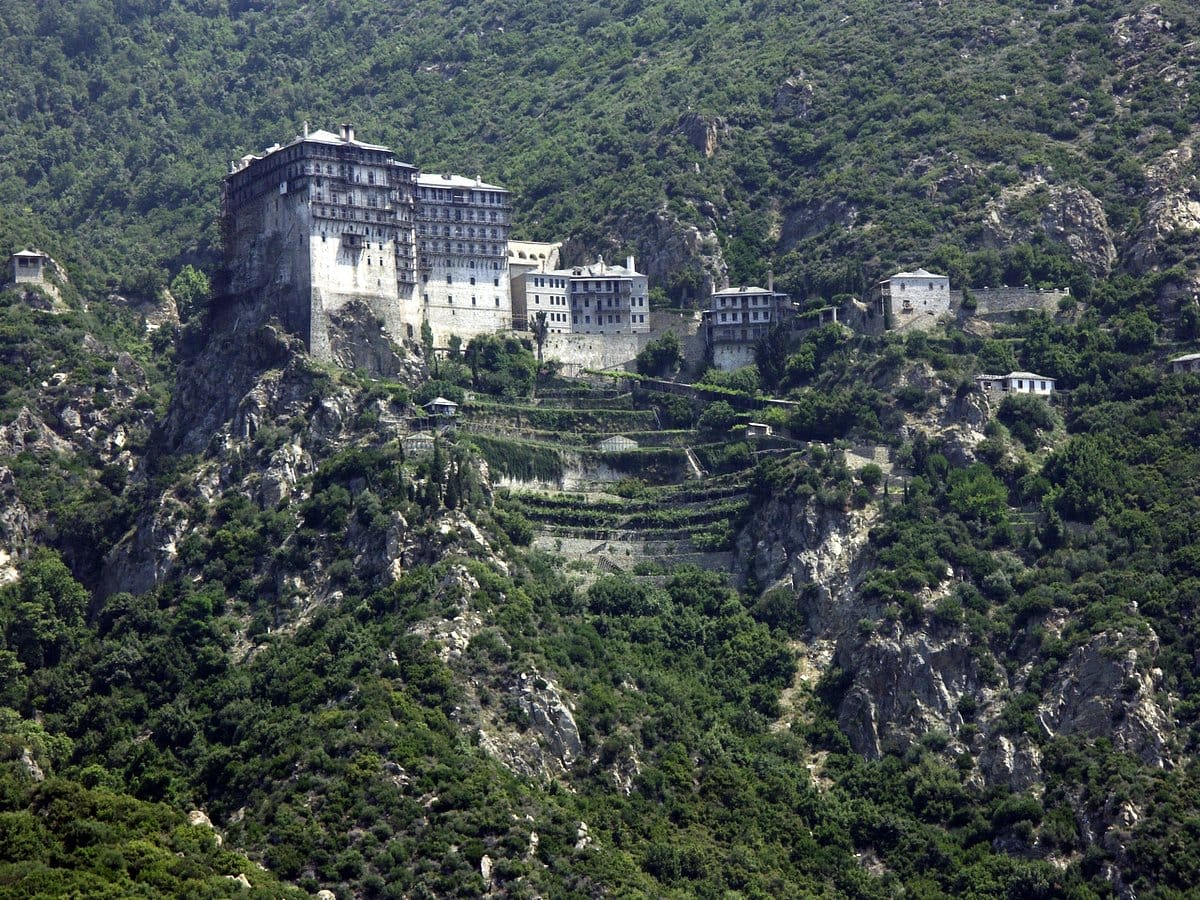
On Mount Athos, monks have prayed this prayer without ceasing for more than a thousand years.
You do not need a mountain. You need only a rope, and the willingness to begin.
Simonopetra Monastery, Mount Athos · Wikimedia Commons (CC BY-SA 3.0)
A story
The Way of a Pilgrim
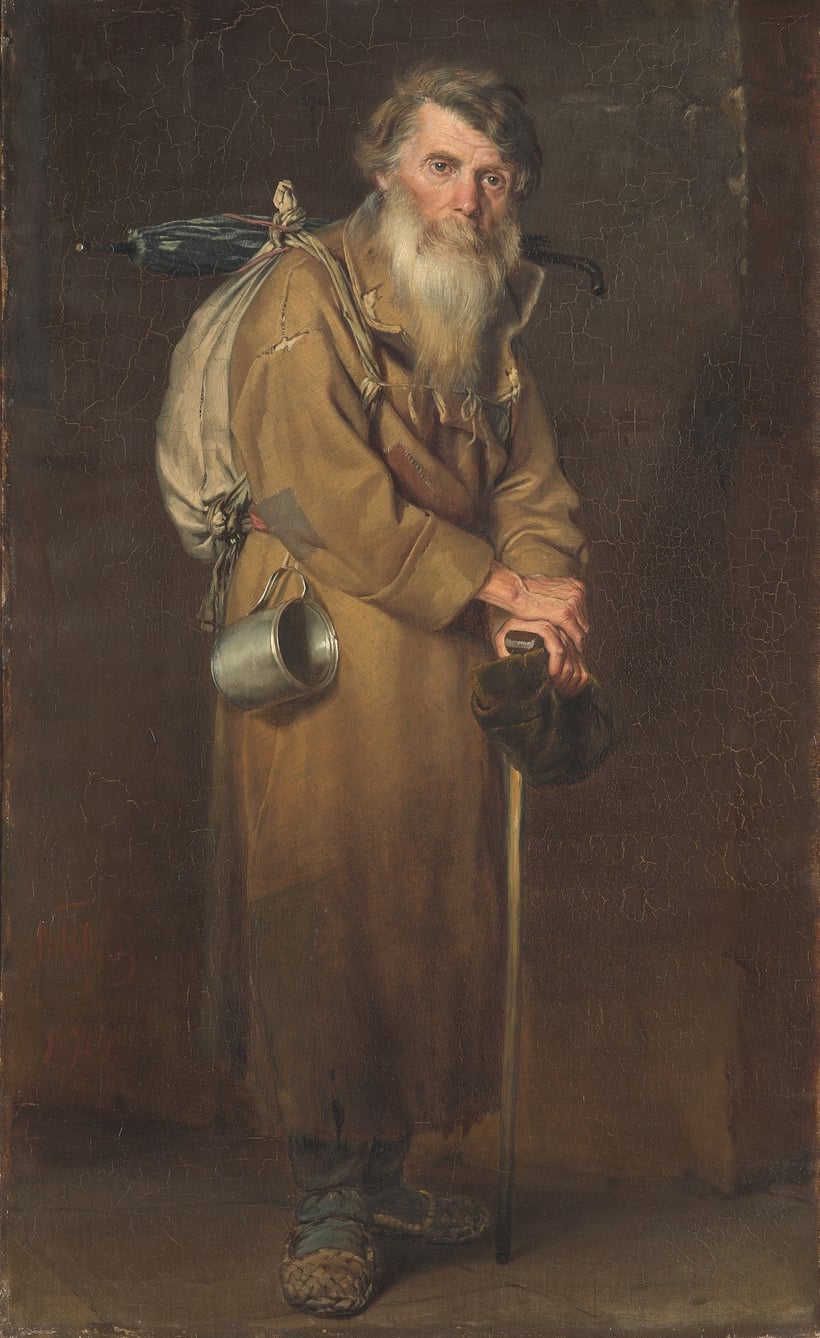
In nineteenth-century Russia, an anonymous wanderer heard the words "pray without ceasing" read aloud in church and could not shake them. How can a person pray every moment of the day? He set out across the land to find someone who could teach him.
At last an old spiritual father took him in, gave him a prayer rope, and set him a rule: say the Jesus Prayer three thousand times a day, then six, then twelve. The prayer that had felt like labor slowly became a comfort, and then a longing, until one day he found it praying itself in his heart while he walked, in step with his own pulse.
He spent the rest of his life walking from village to village with little more than a knapsack, a Bible, the Philokalia, and the prayer that never left him. His small book has taught more people the Jesus Prayer than any monastery. It began, as your prayer can, with a single knotted rope and the willingness to begin.
Voices from the tradition
“The principal thing is to stand before God with the mind in the heart, and to go on standing before Him unceasingly day and night, until the end of life.”
“I think there is no labor greater than praying to God. For every time we want to pray, the demons try to prevent us, knowing that nothing obstructs them so much as prayer to God.”
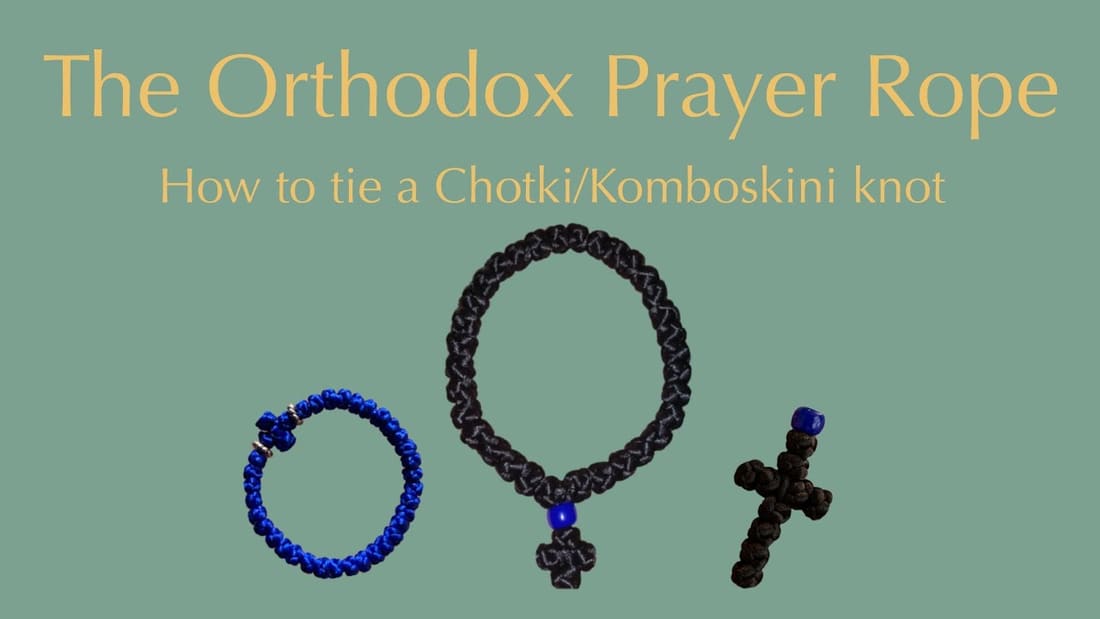
Watch the seven-cross knot take shape
Each knot is a small labor of attention, tied with a prayer. Watch how the cross is woven into the wool, the same way it has been for centuries.
How to pray with the rope
There is nothing to memorize. Hold it, and begin.
- 1
Begin with the cross
Make the sign of the cross (in the Orthodox way, right shoulder before left). Say a short opening: 'In the name of the Father, and of the Son, and of the Holy Spirit. Amen.'
- 2
Hold the rope in your left hand
Loosely, between thumb and forefinger, with the cross resting in your palm. Your right hand stays free to make the sign of the cross.
- 3
One prayer on each knot
On the first knot, pray once: 'Lord Jesus Christ, Son of God, have mercy on me, a sinner.' Then move your thumb to the next knot, and pray it again.
- 4
Continue around the loop
One prayer, one knot, all the way around. Do not rush. A slow, attentive loop of 100 knots may take fifteen or twenty minutes; an everyday pace, five to ten.
- 5
Close at the cross
When you return to the cross, pause. Make the sign of the cross. Pray another loop if you wish, or end quietly with thanksgiving.
Your first week
A gentle way to begin. Small, daily, unforced. By next Sunday you will have a rule of prayer.
One minute
Sit, make the sign of the cross, and pray slowly on ten knots: 'Lord Jesus Christ, Son of God, have mercy on me, a sinner.' That is all.
A quarter loop
Pray twenty-five knots, morning or evening, at the same time each day. Let it become a small, fixed habit.
Half a loop
Pray fifty knots. When your mind wanders, do not be discouraged; gently bring it back to the next knot and continue.
A full loop
One hundred knots, once a day. You have begun a rule of prayer that monks and grandmothers have kept for centuries.
How much? Begin small.
The goal is regularity, not volume. Five minutes every day will form you more than an hour once a month.
If you are beginning
One loop a day, or even half a loop. Same time, same place. Let it become as ordinary as breathing before you ever ask it to become deep.
An established rule
One loop in the morning prayers and one in the evening, with shorter moments of the prayer scattered through the day as you remember it.
The monastic horizon
On Mount Athos, monks pray thousands of Jesus Prayers a day. That is not the lay rule, but it is the horizon the rope quietly points toward.
When the prayer feels dry
It will. Dryness is normal, and even expected. The saints prayed for years through long deserts of feeling without losing heart, because they were not praying for feelings.
The wandering mind is not your failure. It is the very place of the work. Each time you notice you have drifted and gently return to the next knot, you have done the one thing the prayer asks of you.
Do not measure your prayer by how it feels. Measure it by faithfulness: did you show up, and did you pray? When you are discouraged, say less and lean harder. "Lord, have mercy" is a whole prayer. And tell Fr. Stephen; carrying it alone is the hardest way.
Praying rightly
A few words of caution from the tradition, so the prayer leads you toward God and not toward yourself.
Seek humility, not consolations
The goal is repentance and love, never visions, warmth, or feelings. If you pray to 'feel something,' stop and pray simply for mercy. The saints warn against prelest, spiritual self-deception, which feeds on the hunger for spiritual consolations and visions.
Find a spiritual father
The Jesus Prayer is best grown under guidance. Speak with Fr. Stephen about your prayer. A few honest words to a priest will keep you steady more than any book.
Breathe naturally
You may have read of coordinating the prayer with the breath. The fathers teach this only under close direction. For now, simply pray at a natural, unforced pace. Do not strain.
Where to keep it
- •In a pocket, ready to draw out for spare moments.
- •On a small hook in your icon corner, part of the home's prayer space.
- •Loosely around the wrist; some parishioners do, some find it showy. Either is fine.
Treat it with respect. Never leave it on the floor. It is not magic, but it is sacred, bound up with your prayer.
When to use it
- •During morning and evening prayers.
- •While walking, or on a long drive as a passenger.
- •In a moment of fear, stress, or temptation.
- •While waiting, or doing quiet work that needs no thought.
- •At night, when sleep will not come.
Not during the Divine Liturgy; there, give your whole attention to the Liturgy itself.
Choosing your first rope
Choose a length that fits your hand and your day. A 33 or 100-knot wool rope is the right place to start.
The years of Christ's earthly life. Small, light, easy to carry in a pocket or pray on the wrist. A fine first rope.
A middle length, enough for a substantial period of prayer without being long.
The most common rope. The standard for a daily prayer rule, often with bead dividers every 10 or 25 knots.
A monastic rope for long rules of prayer and prostrations. More than most lay Christians need at first.
Look for wool, tied by an Orthodox monastery, ideally already blessed. When you have one, bring it to Fr. Stephen so it can be blessed and your prayer joined to the Church. We will gladly help you find one.
Begin this week
A rope costs almost nothing and asks almost nothing. Come and ask for one after the Divine Liturgy, and we will help you choose your first rope and have it blessed. Then pray it, once a day, and see what God does.
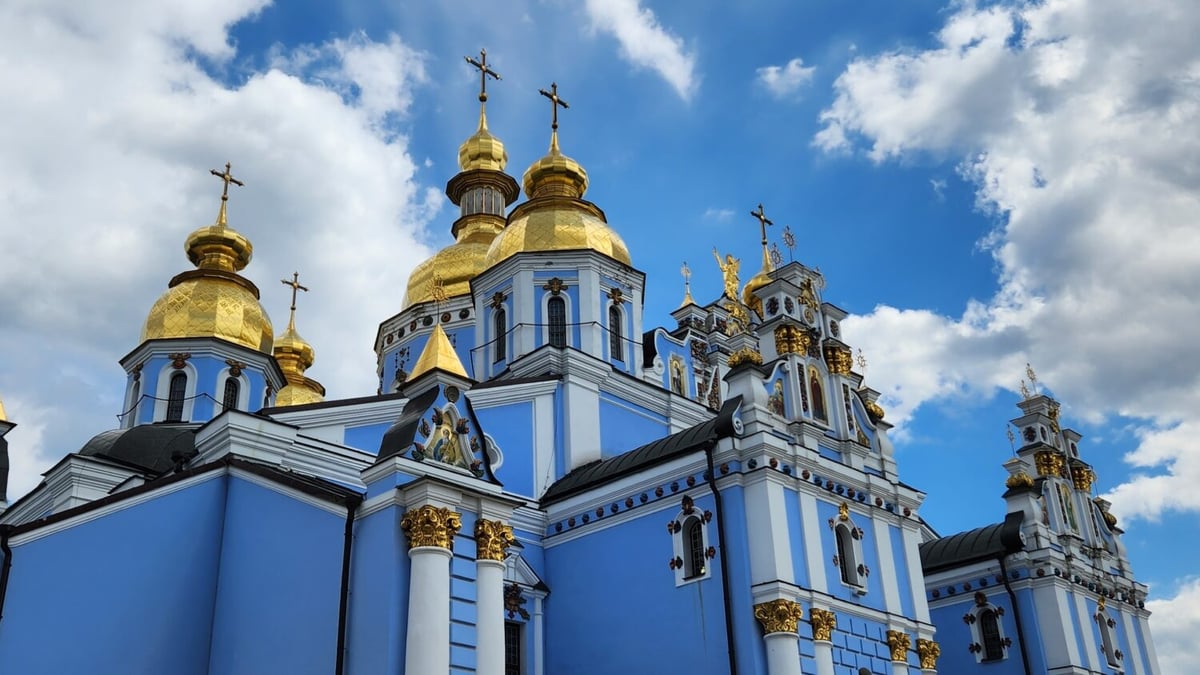
St. Michael Ukrainian Orthodox Church · 9201 60th St, Pinellas Park, FL 33782 · 727-777-4450
Questions people ask
Is the prayer rope the same as a rosary?
No. They look similar and both use repeated prayer, but they differ in form, function, and theology. The Catholic rosary leads you through a structured set of mysteries. The Orthodox prayer rope carries one short prayer, the Jesus Prayer, repeated until it sinks into the heart. They are not interchangeable.
How is it different from a mantra?
A mantra is often a sound used to empty the mind. The Jesus Prayer is the opposite: it fills the mind and heart with a Person, the Lord Jesus Christ, and asks Him for mercy. It is a relationship, not a technique, and it is always addressed to Someone who hears.
Do I need a priest's blessing to use a prayer rope?
Not strictly. Anyone may pray the Jesus Prayer, with or without a rope. That said, most ropes from monastic workshops come already blessed, and bringing your rope to Fr. Stephen for a blessing is a meaningful step that joins your private prayer to the life of the Church.
Out loud or silently? And how fast?
However you can pray with attention. Beginners often whisper the words; later the prayer becomes silent and inward. Pace yourself slowly enough to mean each word, but not so slowly that you drift. The point is attention, not speed.
What do the beads between the knots mean?
On many ropes a bead or a larger knot divides the loop into groups (often every 10, 25, or 33 knots). They simply help you mark longer rules of prayer, or pause to add another short prayer, without breaking your rhythm.
Where do I get a prayer rope?
The best ropes are made by Orthodox monks and nuns, who pray as they tie each knot. Trustworthy sources in the United States include St. Anthony's Monastery in Florence, Arizona, and Holy Cross Hermitage in West Virginia. Avoid mass-produced ropes from non-Orthodox sellers; many are tied incorrectly or made of plastic. Ask us and we will help you choose your first rope.
What if I lose count, or my mind wanders?
It does not matter. The rope keeps the count so your mind does not have to, but the count is not the point. The prayer is the point. When you notice your mind has wandered, gently return to the next knot and pray again. That returning is itself the work.
Can children use a prayer rope?
Yes, simply and without pressure. A short rope and a few prayers at bedtime is a beautiful way for a child to learn that God is near and that He is merciful.
Can a non-Orthodox Christian use a prayer rope?
Yes, with respect. The rope is a tool and the Jesus Prayer is a Christian prayer drawn straight from the Gospel. Anyone may pray it.
What if my rope breaks?
Take it to the parish, or send it to the monastery that made it; the knots can be re-tied. Treat it as a repairable tool, not something disposable. Some parishioners keep one rope for decades.
A small glossary
- Chotki (чотки)
- The Slavic name for the prayer rope. Komboskini in Greek, vervitsa in Romanian, broyanitsa in Serbian.
- The Jesus Prayer
- 'Lord Jesus Christ, Son of God, have mercy on me, a sinner.' The short, repeated prayer the rope is made for.
- Hesychasm
- From the Greek for stillness. The tradition of inner quiet and unceasing prayer of the heart, kept alive on Mount Athos.
- The Philokalia
- A collection of patristic writings on prayer of the heart, first published in 1782 and beloved across the Orthodox world.
- Prayer of the heart
- The deepest stage, in which the Jesus Prayer continues in the heart on its own. A gift of God, not a human achievement.
- Prelest
- Spiritual delusion. The self-deception that comes from pride or from chasing experiences in prayer. Humility is its cure.