Saint Theodosius of the Kyiv Caves, Father of Slavic Monasticism
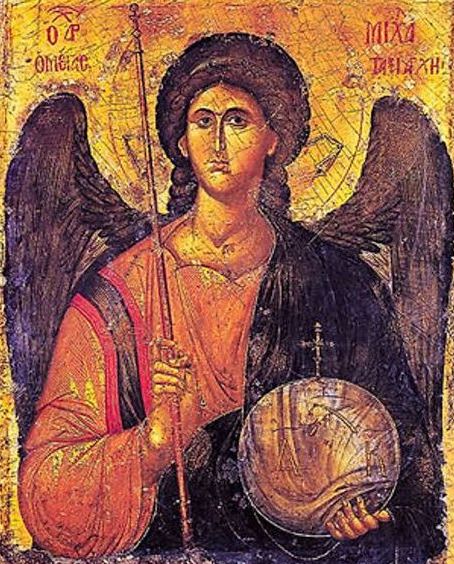
Saint Theodosius of the Caves, преподобний Феодосій Печерський, is one of the great fathers of the Ukrainian land and the first builder of Slavic monastic life. Together with his elder Saint Anthony, he raised up the Kyiv Caves Lavra above the Dnipro, the cradle of monasticism for all the peoples who would later be called Russian, Ukrainian, and Belarusian.
This page is for parishioners who want to know one of the oldest saints of our own Church family, and for visitors who wonder why a parish in Pinellas Park, Florida, prays to a monk who fell asleep in the year 1074.
Why Saint Theodosius matters for a Ukrainian Orthodox parish
The Ukrainian Orthodox Church was not born in a vacuum. After the baptism of Kyiv by Saint Volodymyr (князь Володимир) in 988, the new Christian people of Rus’ needed not only churches and bishops but a deep school of prayer. That school was the Kyiv Caves Monastery, the Києво-Печерська Лавра, dug out of the cliffs above the Dnipro by Saint Anthony and built into a community of brothers by Saint Theodosius.
From this monastery flowed the spiritual life of our land for a thousand years. Its monks became bishops. Its chronicles preserved the memory of our people. Its iconographers, like Saint Alipiy, taught the Slavs how to paint the face of Christ. Its translators and writers, beginning with Saint Theodosius himself, gave us the first works of Slavic theology in our own tongue. When we sing in Ukrainian and English in our parish each Sunday, we are heirs of the work that began in the caves of Theodosius.
For Ukrainian Orthodox Christians in particular, the Lavra is the mother house of the faith. To honor Saint Theodosius is to honor the soil from which our Church grew.
What the early sources say about him
The life of Saint Theodosius was written down by Saint Nestor the Chronicler, the same monk of the Caves who composed the Tale of Bygone Years, the Повість временних літ. Nestor knew Theodosius personally as a younger brother in the monastery, and his Life is one of the earliest works of Slavic hagiography we possess.
From Nestor we learn that Theodosius was born around 1009 in the town of Vasylkiv, south of Kyiv, into a modest family. Even as a child he had no taste for the games of his peers. He went often to church. He wore simple clothing when his mother wished him to dress finely. When his father died and the family moved to the town of Kursk, the young Theodosius worked alongside the peasants in the fields, baking the loaves used for the Divine Liturgy.
His mother, a strong-willed widow, beat him for these humble labors, considering them beneath the family’s dignity. Theodosius bore the blows in silence and continued to bake the bread. After years of running away to monastic centers and being dragged back home, he escaped at last to Kyiv, where Saint Anthony received him into the small community of brothers who lived in the caves on the Berestov hill. He was tonsured a monk by Anthony’s hand and entered into the life of prayer, fasting, and labor. He was about twenty-three years old.
The Synaxis: his feasts on May 16 and July 23
The Orthodox Church remembers Saint Theodosius on two principal feast days.
The repose of Saint Theodosius is commemorated on May 16 on the New Calendar that our parish follows (May 3 on the old calendar). This is the day he fell asleep in the Lord in 1074, surrounded by his brethren after a long and luminous abbacy.
The translation of his holy relics is commemorated on August 27 on the New Calendar (August 14 on the old calendar), marking the day in 1091 when his incorrupt body was transferred from the Far Caves to the great Dormition Church of the Lavra, which Theodosius himself had begun to build.
There is also a third great commemoration, the Synaxis of the Venerable Fathers of the Kyiv Caves who shone forth in the Far Caves on September 10 (August 28 on the old calendar), when we honor Theodosius together with the many monks he formed, and on July 23 (July 10 on the old calendar) we keep the joint feast of Saints Anthony and Theodosius, the founders of the Lavra.
These dates do not fall on a Sunday in most years, so our parish does not always celebrate a Divine Liturgy on the day itself. We remember Saint Theodosius in our litanies and at the proskomedia, and we lift his name especially in the months of May and July when his memory is brightest in our calendar.
How he built monastic life: the cenobitic rule
When Saint Theodosius came to the caves, the brothers around Saint Anthony lived as individual hermits, each in his own cell, meeting for prayer but otherwise carrying their own struggle alone. Anthony was the great solitary, the silent intercessor. Theodosius was given a different gift.
After Anthony retired into deeper solitude and Theodosius was elected abbot, the young father gathered his brothers and gave them a rule. He sent to Constantinople for the Typikon of the Stoudios Monastery, the great cenobitic, common-life, rule of Saint Theodore the Studite. He translated it into Slavonic, adapted it for the customs of Rus’, and applied it to his own brotherhood.
Under this rule the monks lived in common. They ate together at one table. They held no private property, not even a needle. They worked with their hands, copying books, baking bread, weaving, gardening. They kept long vigils. They confessed their thoughts to the abbot. They served the poor at the gates of the monastery without distinction.
Theodosius himself was the first to keep his own rule. He worked beside the brothers in the fields and the bakery. He carried wood and water like the youngest novice, shaming sloth by the silent witness of his own labor.
From the Kyiv Caves this pattern spread to every Slavic land. The great monasteries that followed, the Trinity Lavra of Saint Sergius, the Pochaiv Lavra of our western Ukraine, the Slavic foundations on Mount Athos, drank from the rule that Theodosius set down above the Dnipro. When we pray in our parish today, we pray in a tradition Theodosius did more than almost any other man to shape.
The poor at his gate and the prince at his table
Saint Nestor records that Theodosius built a separate house outside the monastery for the poor, the crippled, the lepers, and the homeless. He set aside a tenth of all the monastery’s bread and provisions for their care. Every Saturday he sent a wagon of loaves to the prisoners in the dungeons of Kyiv. He himself went out at night to visit the sick and to leave alms at the door of widows.
At the same time he was not afraid of princes. When Prince Sviatoslav drove his brother Iziaslav from the throne of Kyiv by force, Theodosius refused to commemorate the usurper at the Divine Liturgy. He sent letters of rebuke to the prince and refused his rich gifts. Sviatoslav, in awe of the abbot’s holiness, did not retaliate, and eventually came to ask his blessing.
In Theodosius we see the pattern that the Orthodox Church has never forgotten. The monk is the friend of the poor and the conscience of the king. He owes the powerful nothing but the truth, and he owes the suffering everything he has.
A miracle of bread and the unfailing larder
Many miracles are recorded in his life. One small story shows the spirit of the monastery he built.
A brother came to Theodosius one evening, troubled. The bread bin was nearly empty. There would be nothing for tomorrow’s meal. Theodosius did not scold him. He told him to lay what little they had on the table and to call the brothers to supper. They blessed the small portion. They sat and ate together. When the meal was over the larder was as full as it had ever been.
The next morning a wagon arrived from a faithful nobleman, sent the day before in obedience to a dream, carrying flour, wine, and oil for the brotherhood.
In this story Saint Theodosius does not perform the miracle by his own power. He simply trusts. He keeps the rule. He gathers the brothers to the table. He blesses the bread. And the Lord, who multiplied the loaves on the mountainside in Galilee, multiplies them again in a Slavic cave. This is the trust that monastic life teaches every Christian, married or single, lay or ordained. The Lord does not abandon those who keep His commandments and share what they have.
How he is depicted: Orthodox iconography of Saint Theodosius
In the icons of the Orthodox Church, Saint Theodosius appears as a monastic father in his late years.
The classical icon type shows him as a tall, thin, white-bearded elder in the dark schema of a great-schema monk. His right hand is raised in blessing or holds a small cross. His left hand holds a scroll inscribed in Church Slavonic with words from his own monastic instruction, often the saying “Brothers, let us not be idle in the work of salvation.”
Other variants depict him standing beside Saint Anthony, the two of them flanking a small icon of the Mother of God of the Caves. Behind them rises the white Dormition Cathedral of the Lavra. This is the type most familiar in Ukrainian iconography, copied in every Ukrainian Orthodox parish that holds the Lavra dear. In some icons Theodosius is shown holding a model of the monastery in his hand, the way a founding saint is often depicted holding the church he raised.
When you enter our church, look for his icon among the saints in our calendar. Light a candle before him. Ask his prayers. He is one of the great fathers of the land from which so many of our families come.
Troparion of Saint Theodosius
The troparion is the short hymn that captures the heart of a saint’s life. We sing this troparion when we commemorate our holy father Theodosius.
Set on high by virtues from your youth, O Theodosius, you loved the monastic life above all things, attaining your desire with courage. You settled in a cave, beautified your life with fasting and brightness, and abided in prayer with the holy angels. Therefore, Christ has shone forth on you in a pillar of fire. Entreat Him, we pray, that our souls may be saved.
Kontakion of Saint Theodosius
You devoted yourself to God from your youth, most-blessed Theodosius, and loving Him above all things, you followed Him with all your soul. Despising perishable and worldly things, you established a monastery in the earth, in which you trained a multitude of monks in heavenly conduct. Therefore, Christ has rewarded you with abundant gifts, O father of fathers and instructor of monks.
From the prayers to Saint Theodosius
The Ukrainian Orthodox Church preserves a longer prayer to Saint Theodosius, sung at his feast and used in private devotion. A small portion is given here, that you may pray with our father in your own prayer corner.
O holy father Theodosius, lamp of the Caves, instructor of monks, father of orphans, friend of the poor, conscience of princes: as you once gathered brothers in your cave above the Dnipro, gather now our scattered hearts into the love of Christ. Teach us your rule of work and prayer. Teach us your trust in the bread of the Lord. Teach us your fearlessness before the powerful and your tenderness toward the small. And lead us at the last to stand with you and with all the Caves Fathers before the throne of the All-Holy Trinity.
A prayer for our parish
Holy Father Theodosius, founder of the Kyiv Caves, teacher of the common life, friend of the hungry and the imprisoned: look down now on this small parish in Florida. Watch over our priest, our faithful, our children, our sick, and our departed. Bless the land of Ukraine, from which the river of your prayer first flowed. Guard our parish from every snare of the evil one. Teach us to share our bread, to keep our rule of prayer, and to fear no power but the Lord. And lead us at the last to stand with you among the Caves Fathers, glorifying the All-Holy Trinity, now and ever and unto ages of ages. Amen.
Come and pray with this saint
Our parish gathers each Sunday for the Divine Liturgy.
| Time | Service |
|---|---|
| 9:30 AM | Hours and Confession |
| 10:00 AM | Divine Liturgy (Ukrainian and English) |
| ~11:30 AM | Coffee and fellowship in the parish hall |
The repose of Saint Theodosius falls on May 16, and his joint feast with Saint Anthony on July 23. We remember him in our litanies and at the proskomedia. When his memory falls on a Sunday, we sing his troparion at the Divine Liturgy. Watch the bulletin for any special commemoration in May or July.
St. Michael Ukrainian Orthodox Church 9201 60th St, Pinellas Park, FL 33782 Phone: 727-777-4450
Learn More
- About Orthodoxy, an introduction to the Orthodox Christian faith
- Becoming Orthodox, the path of catechumens into the Church
- The Jesus Prayer, the prayer of the heart practiced in every monastic cell
- Newcomers, general orientation to our parish