Saint Anthony of the Kyiv Caves, Father of Monks of Rus
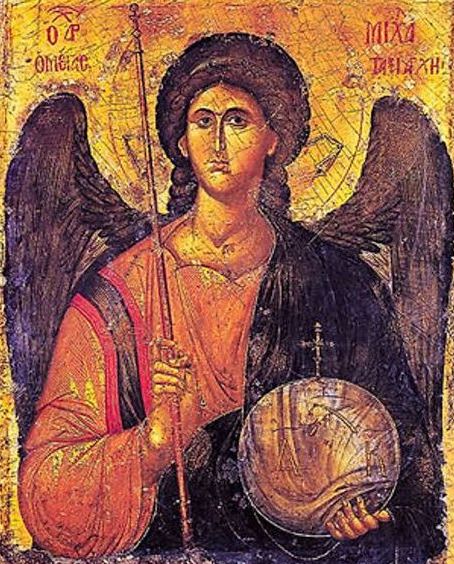
Saint Anthony of the Caves, преподобний Антоній Печерський, is the father of monasticism among our people. He carried the silent fire of Mount Athos across the sea and the steppe and set it down in a single cave above the Dnipro, and from that one cave the whole monastic tradition of Rus was born.
This page is for parishioners who want to know one of the oldest fathers of our own Church family, and for visitors who wonder why a parish in Pinellas Park, Florida, prays to a hermit who fell asleep in the year 1073.
Why Saint Anthony matters for a Ukrainian Orthodox parish
The baptism of Kyiv by Saint Volodymyr (князь Володимир) in 988 brought a new people into the household of the faith. But the faith of a people is not finished at the font. It must be deepened by a school of prayer, a place where men and women learn what it means to die to the world and live to God. For the lands of Rus, that school was the Kyiv Caves Monastery, the Києво-Печерська Лавра, and the father of that school was Saint Anthony.
Before Anthony there were Christian princes in Kyiv and bishops in the great cities, but there was no rooted monastic life of our own soil. Greek monks lived among us, and our pilgrims went to Athos, but the dwelling of unceasing prayer had not yet been hewn into the cliffs of our land. Saint Anthony dug that dwelling with his own hands. From his cave came the founders of nearly every monastery, the bishops of nearly every diocese, and the chroniclers, iconographers, and saints who would shape Ukrainian, Belarusian, and Russian Christian life for a thousand years.
To honor Saint Anthony is to honor the root from which our spiritual tree grew. When we sing the Divine Liturgy in our parish each Sunday in Ukrainian and English, we are heirs of the silence he kept in his cave above the Dnipro.
What the early sources say about him
The life of Saint Anthony was written down by the monks of the Caves who came after him, above all by Saint Nestor the Chronicler in his Tale of Bygone Years, the Повість временних літ. Saint Nestor entered the monastery a few years after Anthony’s repose and gathered the memory of him from the elders who had known him in the flesh.
From Nestor we learn that Anthony was born around the year 983 in the town of Liubech on the Dnipro, north of Kyiv. His baptismal name was Antypii. As a young man, drawn by the love of God and the silence of the desert, he made the long pilgrimage to the Holy Mountain of Athos. There he was tonsured a monk in one of the Athonite monasteries, given the name Anthony in honor of the great Anthony of Egypt, and trained in the rule of fasting, vigil, and the prayer of the heart.
After years of formation his elder said to him, “Anthony, go back to Rus, that others through you may be saved. May the blessing of the Holy Mountain be with you.” Anthony obeyed. He returned to Kyiv, searched the hills for a place of quiet, and found a small cave on the wooded slope above the Dnipro that had been dug by an earlier hermit. He went into that cave. He shut the door. He began to pray.
He was perhaps in his late twenties.
The Synaxis: his feast on July 23
The Orthodox Church remembers Saint Anthony on several feast days.
The repose of Saint Anthony is commemorated on July 23 on the New Calendar that our parish follows (July 10 on the old calendar). This is the day he fell asleep in the Lord in 1073, after some forty years in his cave.
A second great commemoration falls on October 11 on the New Calendar (September 28 on the old calendar), the Synaxis of the Venerable Fathers of the Kyiv Caves who shone forth in the Near Caves, when we honor Anthony together with all the saints whose relics rest in the Near Caves of the Lavra.
Saint Anthony is also remembered together with his disciple Saint Theodosius on the joint feast of the founders of the Lavra, and his name is lifted in every parish whenever the Caves Fathers as a whole are sung in the litany.
These dates do not always fall on a Sunday, so our parish does not always celebrate a Divine Liturgy on the day itself. We remember Saint Anthony in our litanies and at the proskomedia, and we lift his name especially in July when his memory is brightest in our calendar.
How he brought Mount Athos to Rus
Saint Anthony did not invent monastic life. He inherited it. The desert fathers of fourth-century Egypt, the great Cappadocians, the Studite tradition of Constantinople, the Athonite elders who had taught him in his youth, all of these poured their accumulated wisdom into the soul of one quiet man, and that man carried it home.
What Anthony brought to Rus was not a building program. He brought a way of breathing. He brought the prayer of the heart, the Jesus Prayer murmured day and night under his breath. He brought the practice of obedience to a spiritual father. He brought the night vigils, the long fasts, the deep humility before God, the refusal to draw attention to oneself, the slow patient turning of the soul toward the uncreated Light.
For years he lived alone. Then a young man came to the cave and asked to share his life. Anthony received him and tonsured him. Then another came, and another. When the brotherhood grew to a dozen Anthony withdrew further into the hill, dug a new cave for himself, and left the management of the community to his disciples while he returned to silence. When that community in turn grew, he withdrew again.
This was his pattern: receive, form, then release. He was not a founder in the modern sense of a man who builds and administers. He was a father in the patristic sense of a man who plants the seed and lets the Lord give the increase. When his disciple Saint Theodosius was made abbot and began the great work of organizing the Lavra under a written rule, Anthony rejoiced and stayed out of the way. He had done what he came to do.
The cave, the prince, and the freedom of the monk
Saint Nestor records a number of episodes that show the inner character of the saint.
When the brotherhood needed land for a larger monastery, Prince Iziaslav of Kyiv offered to grant them the whole Berestov hill. Anthony sent word back asking only for the small piece of ground that lay immediately above the brothers’ caves, no more. He would not build the house of God on the foundation of greed.
When Prince Iziaslav was later driven from Kyiv by his brother Sviatoslav, Anthony refused to bless the new prince’s seizure of the throne. He spoke the truth and accepted the consequences. He was for a time exiled from his own cave by the angry prince. When at last he was allowed to return, he simply walked back, sat down, and resumed his prayer as though nothing had happened.
In Anthony we see the freedom of the monk. He owes the prince nothing but the truth. He owes himself nothing but obedience to Christ. He owes the brothers everything he has learned. He is bound by no walls and frightened by no powers, because the only thing he loves is God.
This is why the Orthodox Church holds the monastic vocation in such honor. Not because every Christian is called to live in a cave. Most are not. But the cave reminds the whole Church what a Christian is meant to be: a person who has tasted enough of the freedom of Christ that the threats and bribes of this world have lost their grip.
A miracle of healing and the prayer of the heart
Many miracles are recorded in his life. One small story shows the spirit of his prayer.
A man brought to Anthony a sick brother whom the physicians had given up. The man asked the saint to lay hands on the sufferer and heal him. Anthony shook his head. He said, “I am a sinner. Pray to the Lord. He alone heals.” Then he gave the sick man a portion of the simple herbs and vegetables he ate in his cave and quietly went back to his prayer.
The sick man ate the herbs, returned home, and was well by morning.
Saint Nestor adds that many such healings happened in those years, and that Anthony always turned the gratitude of the healed away from himself and toward the Lord. He used to say, “The Lord heals. The brother only prays.”
This is the prayer of the heart in its purest form. The monk does not stand between God and the suffering as a mediator of his own power. He stands beside the suffering, faces the Lord with them, and lets the Lord do the Lord’s work. This is the prayer we are all called to, in our cells or our kitchens or our hospital rooms, and Saint Anthony is its teacher.
How he is depicted: Orthodox iconography of Saint Anthony
In the icons of the Orthodox Church, Saint Anthony appears as an aged monastic father.
The classical icon type shows him as a thin, white-bearded elder in the dark mantia and klobuk of a great-schema monk. His face is gaunt from long fasting. His eyes are deep set and quiet. His right hand is raised in blessing or holds a small cross. His left hand holds an unrolled scroll inscribed in Church Slavonic with words from his own monastic counsel, often a verse pointing the brothers to humility and unceasing prayer.
Other variants depict him standing beside Saint Theodosius, the two of them flanking a small icon of the Mother of God of the Caves between them. Behind them rises the white Dormition Cathedral of the Lavra, with the entrance to the Near Caves at their feet. This is the type most familiar in Ukrainian iconography, painted at the Lavra itself and copied in every Ukrainian Orthodox parish that holds the Lavra dear.
In some icons Saint Anthony is shown alone at the mouth of his cave, his hands joined in prayer, the Dnipro flowing far below him and the spires of Kyiv visible across the river. This icon reminds the faithful that the saint did not begin with a great monastery. He began with a hole in a hillside and the name of Jesus on his lips. Everything else grew from that.
When you enter our church, look for his icon among the saints in our calendar. Light a candle before him. Ask his prayers. He is the father of the monks of our land, and he prays for every Orthodox Christian who tries, in whatever small way, to keep the prayer of the heart.
Troparion of Saint Anthony
The troparion is the short hymn that captures the heart of a saint’s life. We sing this troparion when we commemorate our holy father Anthony.
Having departed from worldly turmoil and renounced the world in the evangelical manner, you imitated the life of John the Forerunner, O venerable Anthony. You found yourself in the wilderness with the holy Theodosius, and after a manly course of struggles, you became as an angel in the flesh. Therefore, with all the saints, pray to Christ God that He may save our souls.
Kontakion of Saint Anthony
Having dedicated yourself to God above all things, and having followed Him from your youth, venerable one, with love you longed for His holy ways, and lived in the world as a true monk. Setting aside every worldly disturbance, you became a wise and venerable disciple in the Mountain of God. Therefore, the inhabitants of Rus revere you as their first father and instructor.
From the prayers to Saint Anthony
The Ukrainian Orthodox Church preserves a longer prayer to Saint Anthony, sung at his feast and used in private devotion. A small portion is given here, that you may pray with our father in your own prayer corner.
O holy father Anthony, first father of the monks of Rus, teacher of silence, lover of the Jesus Prayer, friend of princes only when they kept the truth, friend of the poor always: as you once carried the blessing of the Holy Mountain across the sea and into our caves, carry now the same blessing into our homes and our hearts. Teach us to pray without ceasing. Teach us to fear only the Lord. Teach us to receive disciples and then to release them into the hands of Christ. And lead us at the last to stand with you and with all the Caves Fathers before the throne of the All-Holy Trinity.
A prayer for our parish
Holy Father Anthony, first father of monks among our people, who carried the silence of Athos into the cave above the Dnipro and gave it to all the lands of Rus: look down now on this small parish in Florida. Watch over our priest, our faithful, our children, our sick, and our departed. Bless the land of Ukraine, from which the river of your prayer first flowed. Guard our parish from every snare of the evil one. Teach us the prayer of the heart in our own homes and at our own work. And lead us at the last to stand with you among the Caves Fathers, glorifying the All-Holy Trinity, now and ever and unto ages of ages. Amen.
Come and pray with this saint
Our parish gathers each Sunday for the Divine Liturgy.
| Time | Service |
|---|---|
| 9:30 AM | Hours and Confession |
| 10:00 AM | Divine Liturgy (Ukrainian and English) |
| ~11:30 AM | Coffee and fellowship in the parish hall |
The repose of Saint Anthony falls on July 23, and his joint feast with Saint Theodosius is also kept on that day. We remember him in our litanies and at the proskomedia. When his memory falls on a Sunday, we sing his troparion at the Divine Liturgy. Watch the bulletin for any special commemoration in July.
St. Michael Ukrainian Orthodox Church 9201 60th St, Pinellas Park, FL 33782 Phone: 727-777-4450
Learn More
- About Orthodoxy, an introduction to the Orthodox Christian faith
- Becoming Orthodox, the path of catechumens into the Church
- The Jesus Prayer, the prayer of the heart that Saint Anthony brought from Athos
- Newcomers, general orientation to our parish