Saint Job of Pochaiv, Wonderworker of the Ukrainian Land
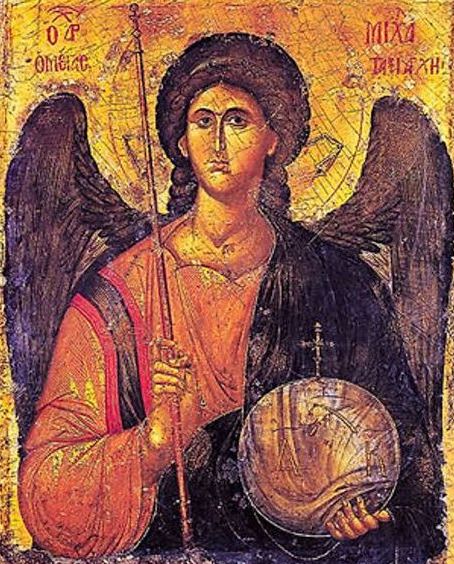
Saint Job of Pochaiv, преподобний Іов Почаївський, is one of the great fathers of the Ukrainian Orthodox faith. He stood at the head of the Pochaiv Lavra in Volhynia during one of the hardest centuries our Church has ever known, and he kept the lamp of Orthodoxy burning in Western Ukraine when every earthly power around him was pressing the people to give it up.
This page is for parishioners who want to know one of our own holy fathers better, and for visitors who wonder why a parish in Pinellas Park, Florida, prays to a Ukrainian abbot who fell asleep in the year 1651.
Why Saint Job matters for a Ukrainian Orthodox parish
The Ukrainian Orthodox Church was tested in many centuries, but the seventeenth was among the cruelest. After the Union of Brest in 1596, the Polish-Lithuanian Commonwealth pressed the Orthodox people of Western Ukraine to abandon their Church and submit to Rome. Bishops were bought. Monasteries were seized. Parishes were forbidden their priests. Families that refused the Union lost lands, schools, and the legal right to worship.
In the middle of this storm, on a wooded hill in Volhynia, stood a small monastery beside a spring where the Mother of God had once left the imprint of her foot. The monastery was called Pochaiv, Почаїв. Its abbot was the monk Job. For more than fifty years he held that hill, raised up brothers, copied books, fed the poor, and refused every offer to bring his monastery under the Union. By the time he reposed in 1651, the Pochaiv Lavra had become the spiritual heart of Orthodox Volhynia, and it has remained one of the great monasteries of the Ukrainian Church to this day.
A parish of the Ukrainian Orthodox Church that bears the name of the Archangel Michael honors Saint Job because his life is the story of how our Church survived. He did not survive by armies or by clever politics. He survived by prayer, by humility, by labor, and by refusing to let go of the faith his fathers handed him. That is the same story every parish family in our diaspora carries.
What the historical sources tell us about him
The chief witness to the life of Saint Job is his disciple Dositheus, who served as his cell-attendant for many years and wrote a brief life of the saint shortly after his repose. We also have charters from the Pochaiv archive, letters between Job and the Orthodox nobility of Volhynia, and the saint’s own surviving writings, including a notebook of homilies and patristic excerpts that he copied in his own hand. These sources give us a clear portrait.
He was born around 1551 in the village of Ugornyky, in the Pokuttia region of Western Ukraine. His baptismal name was Ivan, in Ukrainian Іван, in Church Slavonic Іоан. His family name was Zhelizo (Желізо), which means “iron” in the Ukrainian of his time. The name proved fitting.
At the age of ten, with his parents’ blessing, he entered the Transfiguration Monastery at Ugornyky. At twelve he was tonsured a monk and given the name Job, after the long-suffering patriarch of the Old Testament. At thirty he was ordained to the priesthood. He spent more than twenty years at the Holy Cross Monastery in Dubno under the patronage of Prince Konstantin Ostrozky (князь Костянтин Острозький), the great defender of Orthodoxy in those years, and then around the year 1604 he was called by the brotherhood of Pochaiv to be their abbot.
He governed Pochaiv for nearly half a century. He reposed on October 28 in the year 1651, at an age that the sources put between ninety-eight and one hundred years. His relics were found incorrupt seven years later, and he was glorified as a saint by Metropolitan Dionysius of Kyiv in 1659.
His feasts through the year
The Orthodox Church commemorates Saint Job of Pochaiv on three days each year. The dates below are the days of the Church’s calendar, which parishes on the New Calendar (Revised Julian) keep on the same civil dates. Parishes holding to the older Julian calendar observe each of them thirteen days later.
The principal feast of his repose is October 28. This is the day he fell asleep in the Lord in 1651.
A second feast, the uncovering of his incorrupt relics, is August 28. On this day in 1659 his body was raised from the grave and found whole, fragrant, and unwithered, and the formal glorification followed.
A third commemoration, the translation of his relics, is August 27, marking the day in 1833 when the Holy Synod restored his veneration after a period of suppression and his relics were carried in solemn procession back into the cave church at Pochaiv.
Our parish remembers Saint Job especially on his repose. Watch the bulletin each November for any commemorations at Divine Liturgy. We sing his troparion at the Litany of Saints and ask his prayers for the Ukrainian people and for the Pochaiv Lavra, which remains a living monastery to this day.
The hidden cave and the spring
Two stories from the life of Saint Job are remembered above all others.
The first is the story of his cave. On the hillside below the wooden church of Pochaiv there was a narrow opening in the rock, hardly wider than a man’s shoulders, leading to a small chamber inside the cliff. There, after the day’s work in the monastery was done, Saint Job would enter to pray. He would stand in the cave through the long night hours. He spoke with no one. He ate nothing. Sometimes the brothers, walking past the cave at dawn, would see a strange and gentle light coming from inside, and they understood that their abbot was praying with the prayer of Jesus on his lips. He prayed this prayer constantly: “Lord Jesus Christ, Son of God, have mercy on me, a sinner.”
The cave is still there today. Pilgrims who come to the Pochaiv Lavra venerate it. The narrow opening preserves the memory of how a man learned to be small before God and grew tall in the spirit.
The second story is the story of the harvest. One night Saint Job was praying in his cave when he heard the cries of the monastery’s threshing floor catching fire. He came out and saw the flames. He did not call for water. He took a handful of straw, made the sign of the cross over it, and threw it into the fire. The flames went out at once. The harvest was saved, and the brothers fell at his feet in tears.
These stories tell us something the early Fathers knew. The man who has been hollowed out by prayer is the one God uses to put out fires. Saint Job had become so small in his own eyes that the power of God could move through him without obstruction. He guarded a monastery from the flood of Polish-Lithuanian Catholicization with the same simplicity that he used to guard a barn full of wheat: with the sign of the cross and a confidence in the Lord that was no longer mixed with himself.
How he is depicted: Orthodox iconography of Saint Job
Saint Job appears in icons as a small, slight man, bent slightly forward with age, dressed in the great schema of an Orthodox monk: the black robe, the analavos covered with crosses and the instruments of the Passion, the koukoulion or pointed monastic cap, and the broad mantle of the schema-monk.
His face is long and thin. His beard is grey, narrow, and pointed downward. His eyes are deep-set and turned slightly toward heaven, with the expression of a man who has wept much. His hands are usually depicted in one of two gestures.
In the most common type, his right hand is raised in blessing and his left holds a scroll, which is often unrolled to show a phrase from his teaching: “He that endures to the end shall be saved” (Matthew 24:13), or words from the Jesus Prayer, or a sentence on the keeping of the faith of the Fathers.
In a second type, especially in icons from the Pochaiv Lavra itself, he holds the small church of the Lavra in his hands, the way a founder-saint is often shown holding the monastery he raised up.
The colors are sober: black robes, brown earth tones, the gold of the halo. Behind him in many icons is the hill of Pochaiv with the great cathedral above, or the wooded landscape of Volhynia. Sometimes the spring of the Mother of God appears at his feet, with the imprint of her holy foot in the stone.
When you come to our church, ask Father Stephen to show you where Saint Job’s name is remembered in our Litany of Saints. If we obtain his icon for the parish, light a candle before it. Ask his prayers, especially for the Pochaiv Lavra and for all who suffer for the faith.
Troparion of Saint Job
The troparion is the short hymn that captures the heart of a saint’s life. We sing this troparion whenever we offer prayer to Saint Job of Pochaiv.
Having lived with the meekness of David and the long-suffering of Job, whose name you bore, O father Job, you shone as a beacon to the faithful, abbot and teacher of the holy monastery of Pochaiv. Pray to Christ our God to grant great mercy to those who venerate your holy memory.
Kontakion of Saint Job
Like another patriarch Job, you bore in patience the labors and trials of your earthly course, and you raised up a flock acceptable to God on the holy mountain of Pochaiv. Therefore we cry to you: pray without ceasing for all of us, O venerable father Job, our intercessor.
From the prayers to Saint Job
The Orthodox faithful in Ukraine have prayed for centuries with words like these, drawn from the office of his feast.
Rejoice, Saint Job, glory of the Volhynian land. Rejoice, pillar of the Orthodox faith in days of trial. Rejoice, gentle abbot of the Pochaiv brotherhood. Rejoice, vessel of unceasing prayer in the hidden cave. Rejoice, swift helper of the Ukrainian people. Rejoice, friend and intercessor of all who flee to your protection.
A prayer for our parish
Saint Job of Pochaiv, you who kept the Orthodox faith on the hill of Volhynia when every earthly hand was pressing the faithful to let it go: stand now beside this small flock in Florida. Pray for our priest, our faithful, our children, our sick, our departed. Teach us your patience, your hidden prayer, your simple confidence in the sign of the cross. Watch over Ukraine, over the Pochaiv Lavra, and over every parish of the Ukrainian Orthodox Church scattered across the world. Lead us, with you, to glorify the All-Holy Trinity, now and ever and unto ages of ages. Amen.
Come and pray with us
Our parish gathers each Sunday for the Divine Liturgy in English and Ukrainian.
| Time | Service |
|---|---|
| 9:30 AM | Hours and Confession |
| 10:00 AM | Divine Liturgy (Ukrainian and English) |
| ~11:30 AM | Coffee and fellowship in the parish hall |
Each November we remember Saint Job at the Divine Liturgy nearest his feast. Watch the bulletin for the exact Sunday and any commemorations. All are welcome.
St. Michael Ukrainian Orthodox Church 9201 60th St, Pinellas Park, FL 33782 Phone: 727-777-4450
Learn More
- About Orthodoxy, an introduction to the Orthodox Christian faith
- Becoming Orthodox, the path of preparation and reception into the Church
- The Jesus Prayer, the short prayer Saint Job kept on his lips through the long nights in his cave
- Newcomers, general orientation to our parish